
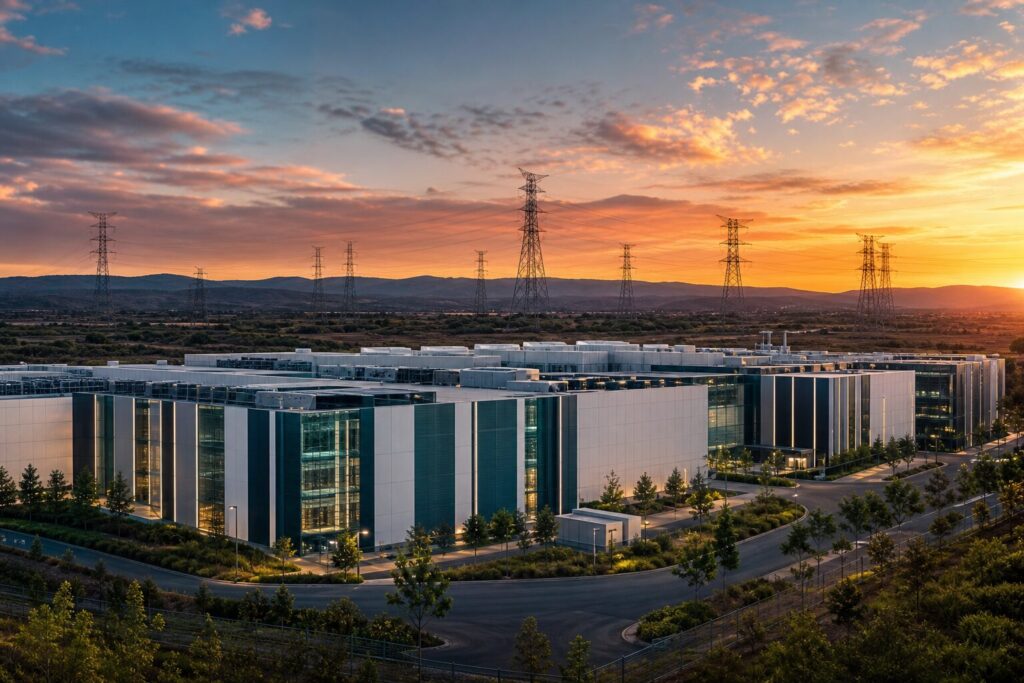
This post documents the high-profile lithium-ion incidents—spanning grid-scale energy storage systems (BESS), freight transport, and industrial facilities—that are contributing to this public resistance. While thermal runaway is statistically rare, the highly visible nature of these events creates a challenging reality for developers navigating local permitting and community relations. These headlines frequently translate into local opposition, prolonged permitting battles, and stalled timelines, highlighting the growing friction between essential energy infrastructure and public perception.
Incidents
2026
Exeter, England Battery Box Fire6/22/2026
A fire broke out at a newly installed “Battery Box” energy storage unit on Pinhoe Road, a residential area in Exeter, England, on Monday, June 22, 2026. Emergency crews rushed to contain the smoking unit, establishing a safety cordon and isolating it from a nearby substation to cool it down. The BESS operator Amp Clean Energy stated the batteries will remain out of use while it conducts “a thorough investigation in partnership with National Grid to understand the cause of the smoke.”
Source: bbc.com
Rainworth, England Battery Storage Fire5/1/2026
A fire broke out at a lithium battery storage container on Rufford Colliery Lane in Rainworth, Nottinghamshire, on the morning of Friday, May 1, 2026. Firefighters from several stations responded to the blaze following a call at 5:21 a.m. Nearby residents were advised to keep their doors and windows closed due to the potential for smoke in the area. No injuries were reported, and the cause of the fire was slated for investigation once the flames were brought under control.
Source: bbc.com
San Marcos, CA Battery Storage Fire1/21/2026
A fire ignited at a battery energy storage unit powering Tesla EV chargers in a San Marcos, California, parking lot early on Wednesday, January 21, 2026. The fire was reported shortly before 3:00 a.m. at the Creekside Marketplace, prompting the precautionary closure of several businesses and half of the shopping center’s parking lot. Firefighters utilized water to cool the unit and brought the blaze under control within an hour. No injuries occurred, and the EV chargers themselves were left undamaged. A hazardous materials team responded to the scene, and fire crews remained to monitor for potential flare-ups until the Tesla-owned unit could be fully decommissioned.
Source: sandiegouniontribune.com
2025
Warwick, NY Battery Storage Facility Fire12/19/2025
A fire ignited at a Convergent Energy and Power battery storage facility in the Village of Warwick, New York, on the night of Friday, December 19, 2025. The incident began around 10:15 p.m. at the 28 Church Street site, nearby the Warwick Valley Central School District facility that suffered a major, multi-day blaze in June 2023. Officials attributed the malfunction to water infiltration— the exact same failure pathway for the 2023 event. The event has reignited community concerns as the batteries had been recently retrofitted and deemed “waterproof” following the previous incidents. No injuries were reported.
Source: westchester.news12.com
Pasadena, CA General Motors Design Studio Fire10/22/2025
A massive four-alarm fire erupted at General Motors’ Advanced Design Center in Pasadena, California, on Wednesday evening, October 22, 2025, at approximately 5:50 p.m. More than 100 firefighters and hazardous materials teams responded to the blaze at the 149,000-square-foot facility located in the 600 block of Sierra Madre Villa Avenue. The fire involved lithium-ion batteries and multiple prototype concept cars under development, making it one of the largest structure fires in Pasadena in many years. A firefighter became trapped inside the building and issued a mayday call but was successfully rescued without injuries. Multiple concept vehicles were destroyed in the blaze, and the cause remains under investigation.
Peoria, AZ BESS Facility Fire10/1/2025
A lithium battery fire broke out at a Salt River Project (SRP) battery storage facility near the border of Glendale and Peoria, Arizona, on the evening of Wednesday, October 1, 2025. The fire began around 5:00 p.m. at the Bolster Substation near 73rd Avenue and Northern Avenue, where flames were seen coming from containers housing batteries at the 25-megawatt site. Dozens of firefighters from Glendale, Peoria, and Phoenix responded to contain the blaze. No injuries were reported.
Source: azfamily.com
Boulder City Solar Facility Battery Fire9/24/2025
A lithium battery fire broke out at the Townsite Solar facility in Boulder City, Nevada, on the evening of Tuesday, September 23, 2025, after two Tesla Megapack battery units ignited. The first 911 call came in at 6:57 p.m., and Boulder City Fire Department crews arrived within eight minutes to find one unit fully engulfed in flames. A second battery unit later caught fire, and by 11:45 p.m. both continued to burn and smolder.
Source: ktnv.com
Parkfield, CA Battery Storage Fire8/30/2025
On August 30, 2025, a fire broke out at the California Flats Energy Storage Project, damaging four of the 84 Tesla Megapacks co-located with a 208 MW solar plant. The incident forced the evacuation of residences within a two-mile radius due to the threat of toxic smoke. First responders allowed the fire to burn out under controlled conditions, demonstrating the extreme difficulty of extinguishing large-scale lithium-ion fires and the severe air quality hazards they pose to nearby communities.
Source: mcso.countyofmonterey.gov
California I-80 Tesla Battery Truck Rollover8/11/2025
A semi-truck hauling Tesla batteries overturned on westbound Interstate 80 near Hirschdale Road, close to the California-Nevada border, on August 11, 2025. The big rig pulled over on its side around 7 a.m. No injuries were reported, but the specialized nature of the Tesla battery cargo complicated cleanup efforts and caused significant traffic delays. Westbound I-80 was reduced to one lane, backing up traffic to the Nevada state line.
Source: sfchronicle.com
Almelo, Netherlands Battery Storage Fire8/4/2025
A commercial battery container situated adjacent to an asylum seekers’ center caught fire on August 4, 2025. First responders utilized water and foam to extinguish the blaze. Air quality tests found minimal concentrations of hazardous substances in the smoke. This incident highlighted the significant proximity risks of placing high-energy-density lithium-ion battery storage near vulnerable populations, where toxic off-gassing could complicate evacuations.
Source: 112nieuws.net
Pohang City, South Korea Battery Storage Fire6/16/2025
A major fire broke out in the indoor energy storage room of a South Korean industrial steel plant on June 16, 2025. The blaze destroyed a two-story building alongside 8,392 battery modules before being extinguished after 29 hours. This event demonstrated the massive structural threat indoor battery fires pose, as thermal runaway can spread rapidly through battery racks, overwhelming automated suppression systems and causing total building loss while releasing highly toxic and explosive gases.
Source: yna.co.kr
Alaska Cargo Ship Car Carrier Fire6/3/2025
A major fire broke out on the cargo ship Morning Midas off Alaska’s Aleutian Islands on June 3, 2025. The vessel was transporting over 3,000 vehicles, including around 800 electric and hybrid cars. Smoke was first seen from the EV-laden deck. All 22 crew members evacuated safely after failing to control the blaze. The fire, still burning, was allowed to burn out due to the extreme challenges of extinguishing lithium-ion battery fires at sea.
Source: nytimes.com
Hillsboro, OR Battery Storage Fire5/22/2025
A fire occurred in the indoor battery room of a data center on May 22, 2025. Emergency crews successfully extinguished the blaze after a difficult five-hour operation. Indoor lithium-ion fires are notoriously dangerous because explosive gases like hydrogen and carbon monoxide can accumulate quickly in enclosed spaces. Such incidents highlight the severe risk of deflagration and the immense challenge firefighters face when navigating confined, smoke-filled structures.
Source: kptv.com
Cirencester, Gloucestershire, England Battery Storage Fire3/28/2025
A fire broke out at the Cirencester Hybrid Solar Farm on March 28, 2025, impacting two shipping containers full of lithium-ion batteries. Firefighters successfully contained the blaze to the two units, preventing propagation to a third container during a seven-hour response. The fire showcased the intense thermal radiation risks of containerized energy storage, as well as the significant threat of toxic smoke plumes, which prompted warnings for nearby residents to shelter in place.
Source: epri.box.com
East Tilbury, England Statera BESS Fire (300 MW / 600 MWh)2/19/2025
A fire broke out at Statera Energy’s Thurrock battery energy storage system (BESS) project in East Tilbury, Essex, on the afternoon of Wednesday, February 19, 2025. The incident began around 4:00 p.m. at the massive under-construction site, which is planned to be one of the largest battery facilities in the UK. Fire crews worked through the night and into the following day to contain the blaze, utilizing water curtains to prevent the flames from spreading beyond the single containerized battery unit involved. The fire was reportedly caused by a fault in a battery cell within the unit. While the facility was not yet fully operational, the incident required significant emergency resources and investigation before the site could be handed back to management on February 20.
Source: energy-storage.news
Moss Landing Power Plant Fire1/16/2025
On January 16, a significant fire erupted at the Moss Landing Energy Storage Facility in California, one of the world’s largest lithium-ion battery storage sites. The Monterey County Sheriff’s Office issued an evacuation order to approximately 1,500 residents in Moss Landing and the Elkhorn Slough area due to potential exposure to toxic smoke. The fire continued to rage and smolder through the night into the morning, and due to the challenges in extinguishing a fire of this type and size, firefighters were forced to allow the fire to burn out on its own.
Source: ess-news.com
Port of Gandia, Valencia, Spain Battery Storage Fire1/5/2025
A fire and subsequent explosion occurred in a containerized battery system located at a port on January 5, 2025. The destroyed container was co-located with a 705 kW solar installation. Explosions are a primary danger of lithium-ion fires in enclosed containers, driven by the buildup of flammable off-gases from thermal runaway. This incident illustrated the catastrophic structural damage and risk to life safety these explosive events present.
Source: pv-magazine.com
2024
Missouri Battery Recycling Facility Fire10/30/2024
Residents of a southeast Missouri town were forced to evacuate their homes Wednesday when a fire erupted at a nearby battery recycler. Residents were urged to shelter in place, close windows, doors and turn off window AC systems. The fire erupted in spite of what the company’s website calls “like the most sophisticated automated and remote supervised and controlled fire suppression system in the world.”
Source: missouriindependent.com
CATL Battery Factory Fire9/30/2024
A fire broke out Sunday at a factory belonging to Chinese battery giant CATL, which supplies electric vehicle makers including Tesla. Emergency services were sent to the plant to fight the fire and to organize the evacuation of any people who were inside the 15,000 square meter (160,000 square feet) site.
Source: barrons.com
Port of Los Angeles fire*9/27/2024
A tractor-trailer carrying lithium-ion batteries overturned and caught on fire on a highway near the Port of Los Angeles. There were flames as high as 10 feet. Firefighters were letting the fire burn out instead of trying to put it out with water.
Source: nytimes.com
Port of Montreal fire*9/23/2024
A fire broke out in a container at the Port of Montreal holding 15,000 kilograms of lithium batteries. Residents of the Mercier—Hochelaga-Maisonneuve borough were advised to stay in their homes Monday (yesterday) evening and close their windows as smoke filled the area.
Source: globalnews.ca
Singapore’s Loyang Data Center*9/10/2024
A fire broke out at a data center in Singapore’s Loyang area on September 10, affecting battery rooms, power supply rooms, and an equipment storage room. The cause was believed to be an electrical issue in one of the battery rooms. Firefighting operations continued for over 36 hours, with some damage to the structure but no reported injuries. Companies like Lazada and Alibaba were affected by the incident, leading to significant disruptions for their services.
Source: thestar.com.my
Escondido Battery Fire (30 MW / 120 MWh)9/5/2024
A lithium-ion battery fire at an SDG&E energy storage facility in Escondido on September 5, 2024 burned for 12 hours, prompting evacuations of more than 500 businesses and 1,500 SDG&E customer homes, as well as schools.
Source: nbcsandiego.com
California highway fire*7/26/2024
A truckload of batteries caught fire after an accident on a California highway on Friday, July 26, just before 6 a.m. PST, trapping drivers in 109-degree heat from road closures as the lithium product burned through the weekend.
Source: nytimes.com
Santa Ana Battery Fire7/17/2024
A fire at a battery energy storage system facility in Santa Ana prompted the evacuation of an industrial area on Wednesday, July 17. Approximately 60 firefighters were involved in the response.
Source: ocregister.com
Otay Mesa Battery Fire (250 MW / 250 MWh)5/15/2024
The May 2024 Otay Mesa battery fire occurred at the Gateway Energy Storage facility, located in an industrial park. The fire, which lasted nearly 17 days, required 50 firefighters and 8 million gallons of water to control.
Source: nbcsandiego.com
Isa, Kagoshima, Japan Battery Storage Fire3/27/2024
The battery system of a solar plus storage plant caught fire. When firefighters checked the temperature and opened the building door, a massive explosion occurred as they attempted to use the smoke exhaust system. Four firefighters were injured, and the fire was extinguished the following day. This event perfectly demonstrates backdraft and deflagration risks; introducing oxygen or creating a spark in a gas-filled battery enclosure is highly lethal.
Source: epri.box.com
2023
Melba, Idaho Battery Fire (2 MW / 8 MWh)10/2/2023
The battery fire at the Idaho Power substation in Melba, which started on October 2, 2023, burned for three days before it was fully extinguished.
Source: kivitv.com
Queensland, Australia (50 MW / 100 MWh)9/26/2023
A fire broke out during the commissioning process of Tesla Megapacks in Queensland, Australia in September 2023, producing hazardous smoke and prompting evacuations. The fire burned for four days before it was fully extinguished.
Source: pv-magazine.com
Valley Center, California (140 MW 560 MWh)9/18/2023
The Moss Landing battery fire on September 20, 2022 occurred at the Elkhorn Battery Energy Storage System in Valley Center, California. The fire started in a Tesla Megapack and burned for five hours, leading to a day-long shelter-in-place order for nearby residents and shutting down nearby Highway 1.
Source: cbsnews.com
Zhuhai City, China Battery Storage Fire8/19/2023
A fire broke out in a battery cabinet inside a warehouse. Firefighters used water to extinguish the flames, but the cabinet suddenly reignited. Staff, protected by firefighters, then used a forklift to transfer each cabinet outdoors for cooling. Reignitions are a hallmark danger of lithium-ion batteries. Stranded energy inside damaged cells can easily spark secondary fires hours or days after the initial knockdown, requiring prolonged submersion or isolation.
Source: epri.box.com
Chaumont, NY (5 MW / 15 MWh)7/27/2023
The 2023 Chaumont, New York battery fire occurred at a solar farm on July 27 and lasted for about six days. The fire prompted local authorities to issue a shelter-in-place order for residents within a mile of the site due to potentially toxic smoke
Source: cbsnews.com
Warwick, NY (8 MW / 38 MWh) + (4 MW / 17.9 MWh)6/26/2023
The 2023 battery fire in Warwick, NY, began on June 26 at a lithium-ion battery storage facility on Route 1A, 500 feet away from the Warwick Valley Central School District, and lasted for three days. The fire was caused by a manufacturing defect that allowed water to seep into the battery containers, resulting in an electrical short. On the same day, another fire broke out at a nearby battery storage site. Both incidents were likely triggered by a severe storm that caused lightning strikes and power surges.
Source: hudsonvalley.news12.com
East Hampton, NY (5 MW / 40 MWh)5/31/2023
The East Hampton battery fire occurred on May 31, 2023, at a 5-megawatt lithium-ion battery energy storage system located at a substation. The fire lasted for approximately two days before it was fully extinguished.
Source: easthamptonstar.com
2022
Poggio-di-Nazza, Corsica, France Battery Storage Fire6/3/2022
A fire occurred in a battery container at a solar facility when a module entered thermal runaway. The fire propagated from the battery rack to the power conversion system, but firefighters prevented it from reaching the transformer compartment by continuously cooling it with water for three days. The event demonstrated the massive logistical burden these fires place on local water supplies and the sustained manpower required to prevent multi-system destruction.
Source: aerosolfire.com
Jangseong-gun, South Korea Battery Storage Fire5/2/2022
A battery located in a containerized solar plus storage system caught fire and burned severely. Containerized systems inherently trap explosive off-gases. This event served as another example of how rapidly thermal runaway can consume an entire modular unit, generating intense localized heat that threatens adjacent equipment and necessitates specialized hazardous materials response strategies.
Source: epri.box.com
Chandler, AZ Battery Storage Fire4/18/2022
A fire began in a substation building housing an AES/Fluence battery system on April 18. The intensely stubborn event lasted for approximately 13 days before being declared fully extinguished on May 1. The extraordinary duration of this fire highlights the nearly unstoppable nature of cascading thermal runaway in large enclosed systems, leaving communities exposed to prolonged operational disruptions and sustained environmental hazards.
Source: epri.box.com
Taichung City, Taiwan Battery Storage Fire3/30/2022
A fire occurred in a containerized battery storage system at a power plant in the Longjing District. Fires at critical power generation facilities pose significant cascading grid risks. The intense heat and toxic smoke from the battery failure not only threaten the immediate container but also risk damaging the broader power plant infrastructure, potentially causing localized grid instability or blackouts.
Source: epri.box.com
Gunwi-gun, South Korea Battery Storage Fire1/17/2022
A fire occurred in a battery system at a solar plus storage facility. The fire department reported heavy smoke but no visible flames upon opening the doors; an explosion occurred ten minutes after firefighters exited the structure, though no injuries were reported. This event perfectly illustrates the “delayed explosion” hazard, where smoldering cells quietly fill an enclosure with explosive gases that ignite unpredictably, posing a lethal trap for first responders.
Source: epri.box.com
Ulsan, South Korea Battery Storage Fire1/12/2022
A three-story energy storage building utilized for urban peak load reduction caught fire and was fully burnt to the ground. Locating multi-story battery systems in urban environments presents extreme life-safety risks. The sheer volume of toxic smoke produced by a fully involved three-story battery fire can easily inundate surrounding city blocks, causing mass respiratory distress and requiring highly complex, wide-scale urban evacuations.
Source: epri.box.com
2021
LaSalle, IL Battery Storage Fire7/19/2021
One container at a rural battery plant caught fire and was extinguished later the same day. While resolved relatively quickly, rural battery fires present unique logistical dangers. Rural fire departments are often volunteer-based, lack specialized hazardous materials training, and may not have access to the millions of gallons of continuous water supply required to safely suppress and cool a major lithium-ion thermal runaway event.
Source: epri.box.com
Neuhardenberg, Germany Battery Storage Fire7/18/2021
An indoor battery energy storage system caught fire at a solar and frequency regulation facility. Indoor battery fires inherently concentrate toxic volatile organic compounds (VOCs) and highly flammable hydrogen gas. The rapid buildup of these gases not only makes the initial fire exceptionally difficult to suppress but also turns the structure itself into a pressurized bomb, endangering all personnel on site.
Source: epri.box.com
Boulouparis, New Caledonia, France Battery Storage Fire7/13/2021
Two battery storage containers were destroyed in a fire at a rural solar plus storage facility. The destruction of multiple units highlights the persistent failure of container spacing and firebreak designs to stop thermal propagation. When one unit enters thermal runaway, the immense radiant heat often compromises adjacent containers before emergency crews can arrive and establish defensive water curtains.
Source: epri.box.com
Standish, MI Battery Storage Fire4/19/2021
Sparks were seen coming out of a battery container at a substation before a fire subsequently broke out. Responders successfully limited it to the single container. This event underscores the electrical arc dangers inherent in high-voltage battery systems. Electrical arcing can instantly vaporize metals, ignite nearby battery cells into thermal runaway, and pose a severe electrocution hazard to both facility workers and incoming firefighters.
Source: wsgw.com
Beijing, China Battery Storage Fire4/16/2021
A fire broke out at a battery energy storage system located on the roof of a shopping mall. A massive explosion occurred during the incident, tragically killing two firefighters and injuring a third. This highly fatal incident proved that rooftop battery installations are exceptionally dangerous; they combine structural collapse risks, difficult vertical access for firefighters, and extreme explosive hazards directly above densely populated civilian areas.
Source: epri.box.com
Bohle Plains, Australia Battery Storage Fire4/7/2021
A fire broke out during the commissioning phase of a Tesla Powerpack installation. Commissioning and testing phases are notoriously high-risk periods for battery storage facilities. As new systems are energized and pushed to their limits for the first time, hidden manufacturing defects or systemic wiring faults can quickly trigger thermal runaway before facility managers have fully integrated emergency response protocols.
Source: epri.box.com
Hongseong, South Korea Battery Storage Fire4/6/2021
A fire involving an LG Energy Solution system took place at an individually operated solar power generation facility. The fierce fire entirely destroyed the facility and was extinguished about four hours later. Total facility loss is a frequent outcome of lithium-ion fires because the heat generated by failing cells is so intense that standard structural materials melt or ignite, making salvage operations nearly impossible.
Source: businesskorea.co.kr
Yeongcheon, South Korea Battery Storage Fire3/11/2021
A fire of unknown cause broke out at a solar power plant in Samgwi-ri and was extinguished after approximately three hours by the dispatched fire department. The frequency of these spontaneous fires highlights a severe underlying danger in the industry: unpredictable thermal runaway. Even under normal operating conditions, microscopic internal cell defects can spontaneously short-circuit, triggering violent fires without any warning or external abuse.
Source: sciencedirect.com
2020
Perles-et-Castelet, France Battery Storage Fire12/1/2020
A fire destroyed a container during acceptance testing at a hybrid supercapacitor and storage system substation. Investigators hypothesized that an electrical connection failure and an insulation fault caused an electric arc and short circuit. This demonstrates the extreme sensitivity of large battery systems to minor installation errors. A single faulty connection can generate an arc flash powerful enough to trigger cascading thermal runaway across the entire container.
Source: epri.box.com
Liverpool, UK Battery Storage Fire9/15/2020
An explosion occurred at a frequency regulation facility before emergency responders were even notified. The fire department contained the blaze to one out of three containers and confirmed the end of the incident two days later. The occurrence of an explosion prior to alarm activation shows how rapidly explosive off-gasses can reach the Lower Explosive Limit (LEL), giving facility operators and communities zero time to react.
Source: epri.box.com
Eumseong, South Korea Battery Storage Fire9/3/2020
A fire occurred in an indoor battery energy storage system. An investigation identified a manufacturing defect involving electrode processing as the root cause, leading LG Energy Solutions to voluntarily replace batteries produced at the associated factory. This event exposed the massive, widespread danger of systemic manufacturing defects; a single flawed production run can seed ticking time bombs across dozens of global facilities, making catastrophic fires almost inevitable.
Source: hankyung.com
Haenam, South Korea Battery Storage Fire5/27/2020
The battery energy storage system at a solar plus storage facility caught fire. The cause was suspected to be battery deterioration due to overcharging, as the site was operating above the government’s safe state-of-charge limits. This highlights the immense danger of pushing lithium-ion batteries beyond their safe operating margins to maximize profit; overcharging rapidly degrades cell stability and is a primary trigger for violent thermal runaway.
Source: epri.box.com
Brisbane, Australia Battery Storage Fire3/17/2020
A battery on the fifth floor of a Griffith University building caught fire. An explosion occurred, injuring one firefighter, and the fire was extinguished in two hours. Locating high-density batteries in high-rise, multi-use buildings presents extreme extraction and ventilation challenges. The explosion and resulting injury demonstrate the severe lethality of navigating narrow, smoke-filled corridors to suppress a chemical fire inside an occupied academic facility.
Source: epri.box.com
2019
Gimhae, South Korea Battery Storage Fire10/27/2019
A fire occurred in a battery energy storage system. In the facility’s energy management system log record, the voltage deviation of each battery inside the rack continuously increased, resulting in thermal runaway. This event demonstrates how microscopic cell voltage imbalances can rapidly cascade into unstoppable thermal runaway, emphasizing the extreme danger of operating large-scale systems without highly sensitive and proactive battery monitoring safeguards.
Source: sciencedirect.com
Hadong, South Korea Battery Storage Fire10/21/2019
A fire destroyed a battery energy storage system at a solar facility. A nearby resident reported hearing a large explosion, and investigators determined the cause was a sudden deterioration in insulation performance. This highlights the severe explosive dangers of sudden insulation failure, which can spark instantaneous arcing and immediate ignition of flammable off-gases, threatening local residents with both blast overpressure and toxic smoke.
Source: sciencedirect.com
Gunwi, South Korea Battery Storage Fire9/29/2019
A fire occurred in a battery energy storage system while the system was actively discharging power to the grid. Discharging generates significant internal heat within lithium-ion cells. This incident demonstrates the severe operational risk of thermal mismanagement during heavy load periods, as inadequate cooling during standard discharge cycles can rapidly push battery modules beyond their safe thermal limits and initiate violent fire events.
Source: sciencedirect.com
Pyeongchang, South Korea Battery Storage Fire9/24/2019
Battery thermal runaway occurred after significant battery abuse from repeated overcharging and discharging, as confirmed in the site’s energy management log record. This highlights the immense danger of aggressively cycling lithium-ion batteries to maximize financial returns. Continuous overcharging rapidly degrades cell chemistry, removing safety margins and guaranteeing violent thermal runaway and toxic gas release if automated protection systems fail to intervene in time.
Source: sciencedirect.com
Yesan, South Korea Battery Storage Fire8/30/2019
The facility’s battery charging rate was aggressively increased from 70 percent to 95 percent, and a severe fire occurred just two days later. This event clearly demonstrates the acute danger of pushing lithium-ion storage limits. Operating batteries at near-maximum capacity critically destabilizes internal chemistry, making systems highly volatile and prone to sudden, catastrophic thermal runaway that endangers entire facilities and nearby civilian personnel.
Source: sciencedirect.com
Jangsu, South Korea Battery Storage Fire5/26/2019
A fire occurred at a solar plus storage facility. Fortunately, the scale of the localized fire was small enough to extinguish without requiring the local fire department. While successfully contained, the event underscores the spontaneous fire risks inherent in renewable energy storage sites. Unpredictable electrical shorts can trigger localized thermal runaway at any moment, necessitating continuous on-site vigilance and robust automated suppression systems.
Source: epri.box.com
Chilgok, South Korea Battery Storage Fire5/4/2019
A severe fire broke out at a solar generation facility while batteries were being replaced and restarted, destroying the site and causing millions in damage. This event demonstrates the extreme hazards present during battery maintenance and system reboot phases. Handling degraded cells and re-energizing large-scale lithium-ion systems can easily trigger deadly electrical arcs and instant thermal runaway, endangering maintenance workers and facility structures.
Source: epri.box.com
Surprise, AZ Battery Storage Fire4/19/2019
An internal cell defect initiated cascading thermal runaway at an AES facility. Despite clean agent suppression, explosive gases accumulated. When firefighters opened a door three hours later, oxygen agitated the gases, causing a catastrophic explosion that severely injured several first responders. This hallmark incident defined the extreme deflagration and backdraft dangers of lithium-ion fires, proving traditional suppression methods cannot stop thermal propagation.
Source: epri.box.com
Tualatin, OR Battery Storage Fire4/11/2019
A severe fire broke out during a new product test of six large lithium-ion batteries inside a commercial warehouse. Testing unproven high-capacity batteries indoors presents catastrophic risks. The sudden failure released intense heat and toxic volatile organic compounds into an enclosed space, highlighting how rapidly experimental lithium-ion technology can overwhelm standard structural fire protections and pose severe inhalation hazards to facility workers.
Source: epri.box.com
Ulsan, South Korea Battery Storage Fire1/21/2019
A massive fire broke out on the second floor of a three-story energy storage building at an industrial plant, rapidly spreading to the third floor. The intense blaze took three hours to extinguish. This incident showcases the extreme structural fire-spread dangers of multi-story battery installations. The tremendous upward heat flux from thermal runaway can easily bypass floor barriers, ensuring total building destruction.
Source: motie.go.kr
Jangsu, South Korea Battery Storage Fire1/15/2019
A fire occurred in a battery energy storage system while the system was idle and on standby after a charging cycle. This demonstrates the terrifying unpredictability of lithium-ion technology; highly destructive thermal runaway can occur spontaneously due to internal microscopic cell defects even when the system is resting. This “ticking time bomb” hazard requires continuous thermal monitoring and perfectly isolated safety zoning.
Source: motie.go.kr
Wando, South Korea Battery Storage Fire1/14/2019
A devastating fire broke out in an energy storage system at a solar power plant, destroying 61 square meters of a building and 1,200 battery modules. It required 70 firefighters to bring the intense blaze under control. This demonstrates the staggering mass-involvement danger of battery fires, where thermal propagation quickly consumes thousands of modules, creating uncontrollable infernos that severely drain local emergency resources.
Source: epri.box.com
Yangsan, South Korea Battery Storage Fire1/14/2019
A fire broke out in the morning at the energy storage system of an industrial steel plant. The fierce, stubborn blaze burned for more than four hours before being successfully extinguished. Industrial battery fires present severe prolonged hazards, as the deep-seated thermal runaway fiercely resists traditional water application. The long burn time exposes nearby industrial infrastructure to prolonged thermal radiation and corrosive smoke.
Source: epri.box.com
2018
Samcheok, South Korea Battery Storage Fire12/22/2018
A severe fire completely destroyed a battery energy storage system at a solar facility. The catastrophic event caused such immense structural and elemental destruction that investigators were unable to determine the root cause. This highlights the incredibly destructive capability of large-scale lithium-ion fires. The staggering heat generated by cascaded thermal runaway literally melts evidence, complicating safety improvements and leaving communities vulnerable to repeat failures.
Source: epri.box.com
Jecheon, South Korea Battery Storage Fire12/17/2018
A major fire broke out at a battery energy storage plant, prompting the government to recommend the immediate shutdown of all uninspected sites nationwide. This event demonstrates the catastrophic systemic risk of widespread battery deployments. A single massive failure can expose dangerous industry-wide manufacturing or integration flaws, forcing emergency national shutdowns to prevent further violent thermal runaway events and protect the broader electrical grid.
Source: epri.box.com
Geochang, South Korea Battery Storage Fire11/22/2018
A massive fire burned through 17 square meters of a solar power facility, totally destroying the electricity storage room and a prefabricated sandwich panel structure. This event highlights the severe danger of housing high-density lithium-ion batteries in standard prefabricated structures. The intense, rapid heat of thermal runaway instantly melts and ignites cheap structural paneling, transforming a contained battery failure into a rapid, uncontainable structural inferno.
Source: epri.box.com
Mungyeong, South Korea Battery Storage Fire11/21/2018
A fire broke out at a rural solar plus storage facility. These types of battery fires demonstrate the unique dangers facing remote installations. Rapid thermal runaway produces immense heat and highly toxic smoke plumes that can quickly spark secondary wildfires in surrounding vegetation. The remote location also heavily delays emergency response times, allowing the fire to reach maximum destructive potential before suppression begins.
Source: epri.box.com
Yeongju, South Korea Battery Storage Fire11/12/2018
A fire of unknown cause broke out in a 33-square-meter sandwich panel building while the energy storage system was resting on standby. All 374 lithium-ion batteries were completely incinerated. This highlights the silent, spontaneous danger of resting batteries and the vulnerability of non-fire-rated enclosures. Without warning, a resting system can instantly ignite, rapidly consuming the entire building and releasing concentrated toxic gases.
Source: epri.box.com
Cheonan, South Korea Battery Storage Fire11/12/2018
A devastating fire broke out at a solar facility, destroying a dedicated energy storage room and incinerating 187 large-scale lithium-ion batteries. The stubborn fire required two hours to extinguish. This event showcases the extreme, concentrated thermal hazard of densely packed battery rooms. When cascading thermal runaway begins, the incredibly dense heat load makes direct interior firefighting nearly impossible and guarantees total equipment loss.
Source: epri.box.com
Yongin, South Korea Battery Storage Fire10/18/2018
A massive fire broke out in a 24-megawatt grid frequency regulation facility consisting of 12 densely packed battery containers. This incident highlights the profound catastrophic dangers of multi-container utility sites. When thermal runaway strikes high-capacity grid infrastructure, the intense fire threatens to propagate across massive fuel loads, releasing colossal amounts of toxic smoke and severely destabilizing local power grid operations.
Source: epri.box.com
* =large-scale lithium but not BESS fires