In this post, you’ll learn:
- Why data center growth — projected by Lawrence Berkeley National Laboratory to reach about 11.8% of U.S. electricity by 2030 — has made power architecture a capacity and grid-stability challenge.
- How sodium-ion batteries sited close to the 800 VDC distribution can respond to disturbances faster than a traditional AC power train.
- How energy storage enables a data center to hold voltage and frequency steady instead of working only during grid faults or outages.
- Why Alsym’s non-flammable Alta cells can sit right next to the power train, where they respond to transients and power swings.
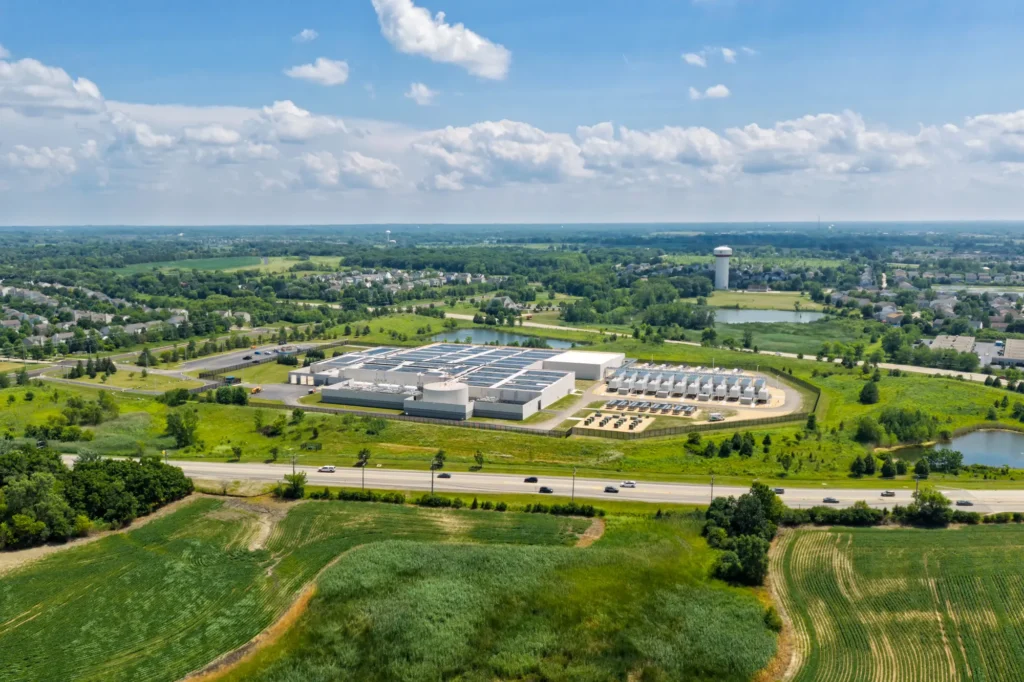
As AI data centers become among the largest single loads on a regional grid, how much power they draw matters. But how they interact with the grid, especially when conditions on either side change suddenly, is equally important.
Lawrence Berkeley National Laboratory now estimates data centers could account for 11.8% of U.S. electricity by 2030, with scenarios running from 9.5% to 15.3%. Legacy power architecture was not built for this sharp demand increase, or for the way AI loads move. Rack density has climbed from an average of 6–10 kW to 120 kW and beyond.
A 2024 event in Northern Virginia showed what grid instability can look like after a lightning arrestor on a 230 kV line failed. Multiple nearby data centers switched to backup generation, dropping roughly 1,500 MW of voltage-sensitive load off the grid at once. The grid frequency moved outside its normal band, and the regional operator had to rebalance quickly to keep the disturbance from spreading.
An 800 VDC power system architecture changes that equation. In these modern designs, battery storage is being placed directly on the DC bus, absorbing GPU power swings and helping to hold voltage and frequency steady. Alsym Energy’s Alta sodium-ion cells are designed for that demanding duty: non-flammable at the chemistry level, rated for 2C continuous charge and discharge and 8C short duration pulses, able to deliver 15,000 cycles, and able to sit right next to the power train. The Alta cells allow a data center to be a grid asset instead of simply a load the grid must endure.
What 800 VDC changes
Moving to 800 VDC is mostly a response to rack power density. NVIDIA’s technical write-up on the architecture describes the impact of the shift in terms of throughput: row-level 800 VDC busways carry 85% more power through the same conductor size as 415 VAC, cut copper requirements by 45%, and improve end-to-end power efficiency by up to 5% by removing conversion stages between the grid and the GPU.
The side effect matters as much as the efficiency. With fewer conversion layers in the way, storage can sit on the DC bus rather than behind a chain of AC/DC stages — which means it can react to what the load is doing instantly.
How batteries fit into that architecture
On an 800 VDC bus, battery storage does three things that were never asked of a traditional UPS string.
It absorbs sub-second transients. GPU clusters draw power in sharp steps rather than a smooth line, and a battery close to the bus can take the top off those steps before they reach the distribution board or the utility connection.
It smooths the slower swings. Training jobs ramp up and down over seconds and minutes as clusters move between compute, communication, and checkpointing. Storage can charge through the quiet stretches and discharge through the heavy ones, so the facility presents a flatter load to the grid.
With the right controls and inverters, energy storage can help hold voltage and frequency during a utility disturbance rather than disconnecting from the grid. That is the difference between a facility the grid operator must plan around and one that benefits both the grid and the data center operator.
Each of those roles asks something specific of the cells: high discharge rate, tolerance for constant cycling, and safe chemistry that can be installed indoors near the power train.
Where the Alta cells fit
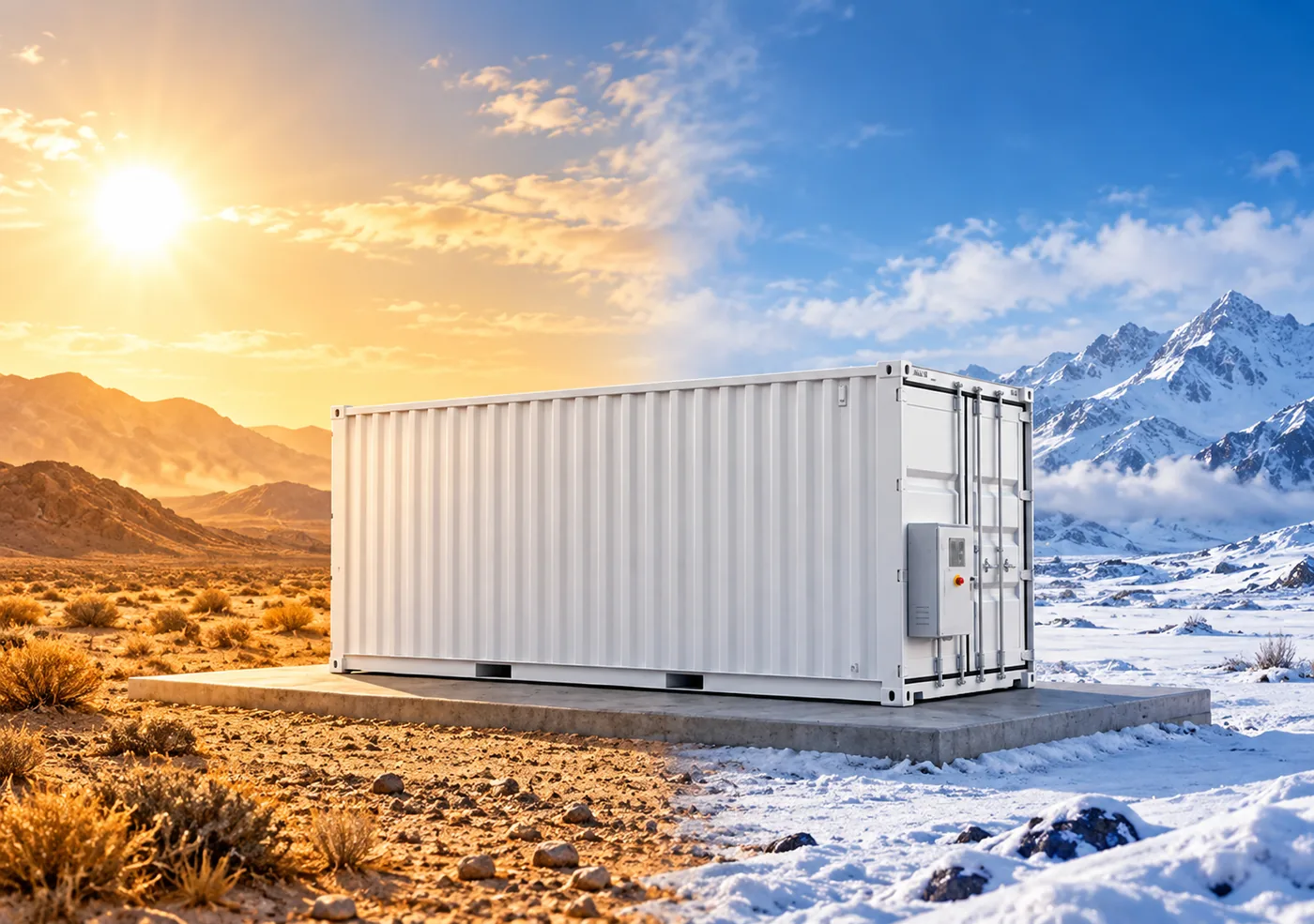
Alsym Alta NFPP+ sodium-ion cells can charge and discharge at 2C with high power 8C pulsing for 30 seconds — enough to answer fast load steps rather than only ride through an outage. The cells are rated for 15,000 cycles and 20+ years, which is the kind of life a battery needs if it is cycling many times a day. And they can operate from −40°C to 60°C on passive cooling alone.
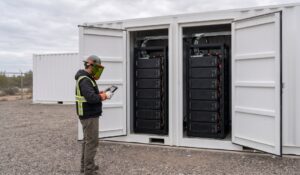
NFPP+ sodium-ion battery technology has been developed by Alsym to be non-flammable at the chemistry level. Because the cells do not enter thermal runaway, it changes where the battery storage can be installed: next to the power train it supports.
For operators, that turns energy storage from an insurance policy into a working asset. Battery cells that can cycle multiple times a day at high rates without trading away asset life can shave facility peaks and buffer GPU load swings, reducing the strain on the electric grid from an AI data center interconnection. Siting storage inside or immediately next to the facility, rather than across the lot, also cuts cable runs, conversion losses, and land use. For the grid, adding energy storage to an AI data center facility creates a flatter, more predictable load profile.
The data center’s behind-the-meter energy system can also help hold voltage and frequency through a disturbance instead of disconnecting from the grid and switching to backup generation, which can lead to grid instability. In an era characterized by increased single-facility power demand, strategically placed energy storage can make all the difference, if the underlying chemistry is the right one for the job.
Learn more about Alta cells for AI Data Centers.
Related articles: