- Why a rated temperature range doesn’t show the usable power a battery delivers at your site’s real extremes.
- How depth of discharge, charge rate, temperature, and state of charge shape battery life more than a cycle count.
- Why the equipment around the cells decides whether a system delivers power when the grid needs it.
- How Alsym Energy’s non-flammable Alta cells run from −40°C to 60°C with passive cooling only, for 15,000 cycles and 20+ years of service life.
As electricity grids become increasingly dependent on renewable energy, grid-scale battery storage is moving from a supporting role to a critical part of power infrastructure.
Utilities and project developers are relying on battery energy storage systems (BESS) to balance supply and demand, manage peak loads, stabilize the grid, and improve resilience.
But not all grid storage batteries are designed to withstand the same operating conditions. A battery that performs well in a controlled room-temperature environment may face very different challenges when deployed in the Nevada desert, during a Norwegian winter, or at a coastal utility site that cycles multiple times a day.
Extreme temperatures, frequent cycling, and years of continuous operation can significantly affect battery performance, maintenance requirements, and project economics.
For project developers and BESS integrators, selecting the right battery chemistry requires looking beyond upfront costs and nominal energy capacity. Temperature tolerance, cycle life, degradation, safety, and long-term reliability are equally important considerations that determine the total cost of ownership over a BESS project’s lifetime.
In practice, choosing a grid storage battery for harsh climates and heavy cycling comes down to three questions: how much usable power and energy it delivers across the site’s real temperature range, how many years it lasts under the project’s actual duty cycle, and how much supporting equipment it needs to keep delivering.
Beyond Temperature Ratings: Real-World Performance in Heat and Cold
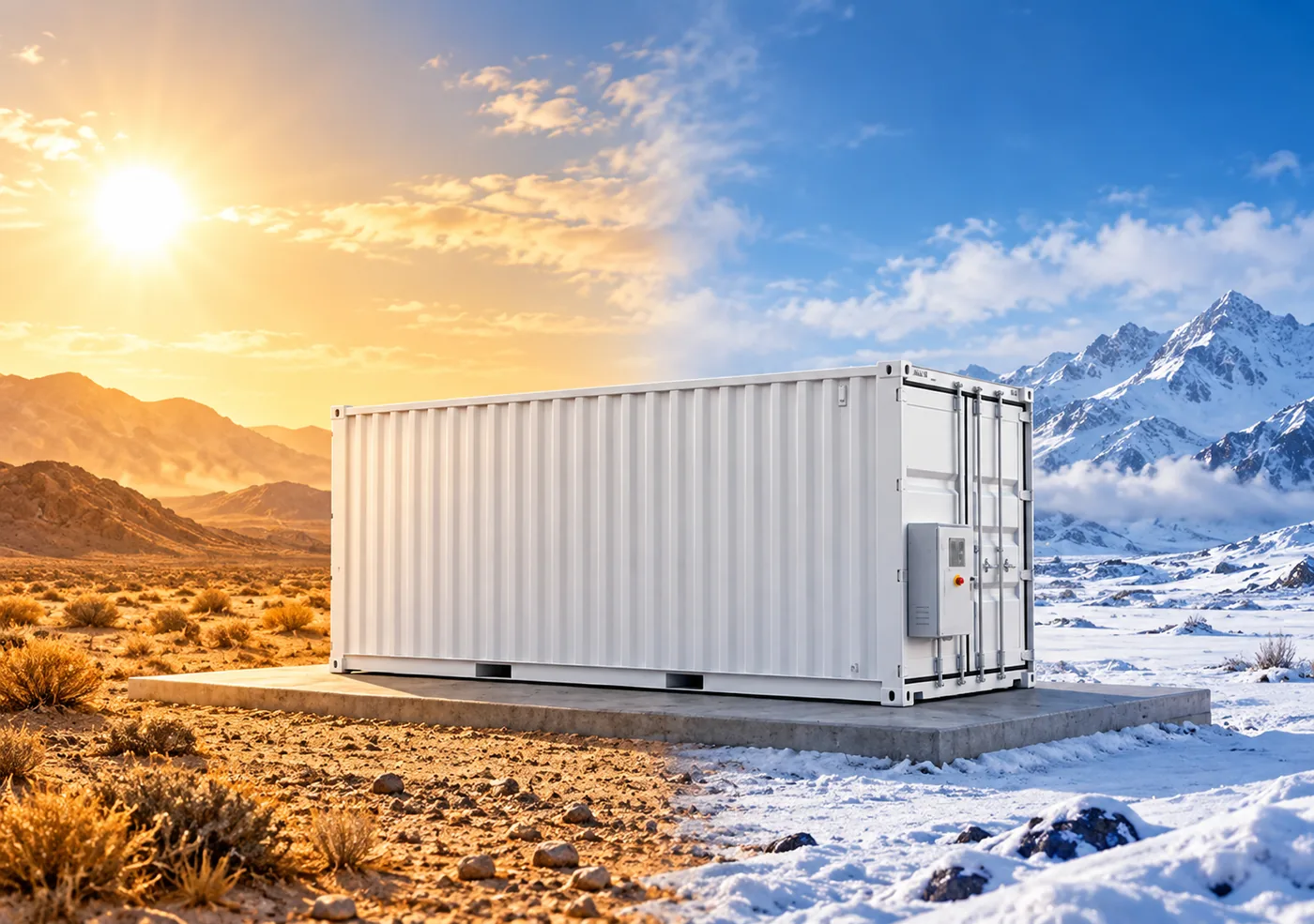
Temperature is one of the most important factors influencing battery performance and longevity. A battery’s advertised operating temperature range does not necessarily indicate how well it performs throughout that range. Grid-scale battery storage projects are frequently installed outdoors, where ambient temperatures can vary substantially throughout the year.
High temperatures can accelerate unwanted chemical reactions inside battery cells, increasing the rate of capacity loss and potentially shortening their useful life. In lithium-ion batteries, for example, elevated temperatures can contribute to electrolyte degradation, growth of resistive interfacial layers, and other aging mechanisms.
In extreme circumstances, certain cell chemistries can also experience thermal runaway, in which heat-generating reactions become self-sustaining.
Cold environments create a different set of problems. At low temperatures, electrochemical reactions slow down, internal resistance increases, and the battery may deliver less usable energy or power. Charging can become particularly challenging for some lithium-ion technologies because of the risk of lithium plating under unfavorable conditions.
To manage these risks, many BESS designs rely on sophisticated thermal management infrastructure, including liquid cooling, ventilation, heating systems, temperature monitoring, and automated controls. These systems can be effective, but they introduce additional equipment, maintenance requirements, parasitic energy consumption, and potential points of failure.
Most battery technologies operate most efficiently within a defined temperature range. Operating outside that range can void the warranty, reduce available power and energy, accelerate degradation, or require additional heating and cooling infrastructure.
The important distinction is between a battery’s stated operating temperature range and its ability to deliver useful performance throughout that range. A battery may technically operate at an extreme temperature while delivering substantially reduced power or capacity. For projects in harsh climates, buyers should request performance data at realistic operating temperatures rather than relying solely on specifications measured at room temperature.
Beyond Cycle Counts: What Really Determines Battery Life
Cycle life is another critical consideration when selecting batteries for grid applications. A battery cycle generally refers to a discharge and subsequent recharge equivalent to its rated capacity. However, actual battery usage rarely follows a simple full-discharge, full-recharge pattern. Grid batteries may experience multiple partial cycles, extended periods at high or low states of charge, and frequent changes in power output.
These operating patterns affect how quickly batteries degrade. Battery degradation depends on several interacting variables, including depth of discharge (DoD), charge and discharge rates, operating temperature, and state of charge, as a 2025 study of grid-duty LFP aging illustrates.
Deeper discharge cycles can increase degradation in many battery chemistries, although the relationship varies by technology. Actual operating patterns matter, too. Daily energy shifting involves a different duty cycle from frequency regulation, which can require frequent, rapid changes in power. Backup applications may involve relatively little cycling but long periods on standby.
A headline cycle count tells only part of the story. The real test is how many years a battery can reliably deliver the usable energy and power the grid project demands, under the temperatures, duty cycles, and operating conditions it will actually face.
Look for capacity-retention data by year under your project’s expected depth of discharge, charge and discharge rates, and site temperatures, not a single cycle count measured at room temperature. For more on reading these figures, see our guide to comparing grid storage battery specs.
Beyond Battery Life: Delivering Power When It Matters
Temperature tolerance and cycle life establish how well a battery withstands its environment and workload. Reliability brings these considerations together around a practical question: will the system deliver the required power when the grid needs it? A long-lasting battery is valuable only when the equipment supporting it remains dependable as well.
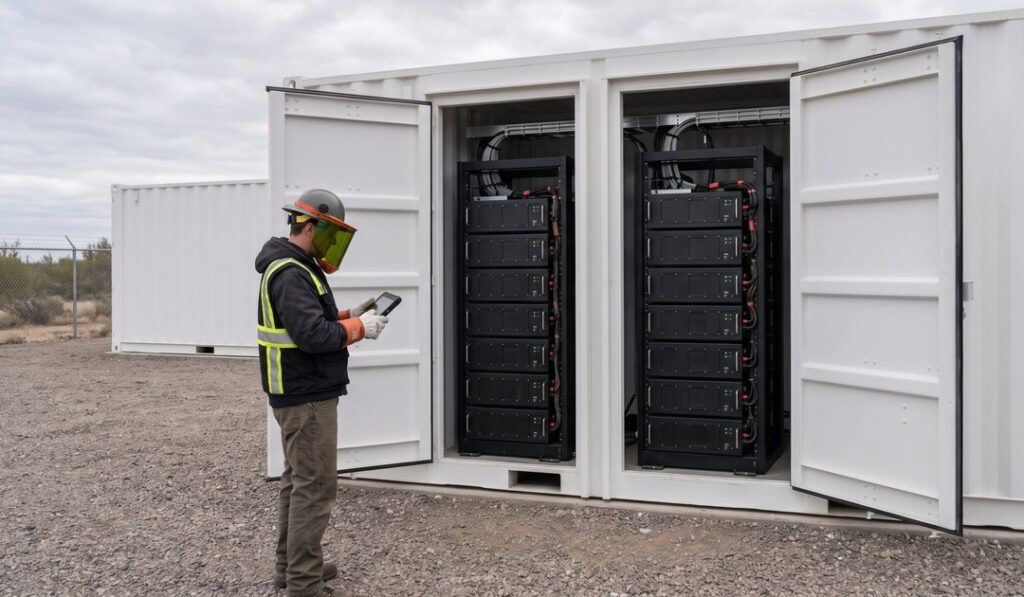
This is where the complexity of an energy storage system matters. Heating, cooling, and monitoring equipment help maintain suitable operating conditions, but they also introduce maintenance requirements and potential points of failure.
Consider a battery whose cells remain healthy, but whose cooling equipment needs repair: the affected unit may have to reduce output or stop operating until the problem is resolved. The battery still has useful capacity, but the project cannot fully depend on it.
The procurement question therefore extends beyond how long the battery lasts to how much intervention it needs to keep delivering. Buyers should evaluate maintenance requirements, component replacement schedules, service response times, and demonstrated system availability alongside temperature and cycle-life specifications. Reliability means sustaining the required service, not simply preserving the battery’s ability to store energy.
What to Ask For When Comparing Grid Storage Batteries
| Criterion | The headline spec | What to ask for instead |
|---|---|---|
| Temperature tolerance | Operating temperature range | Usable power and capacity at your site’s hottest and coldest expected temperatures, the heating or cooling needed to stay in range, and the warranty’s temperature limits |
| Cycle life | Cycles to end of life | Capacity retention by year under your project’s depth of discharge, charge and discharge rates, and temperatures |
| Reliability | Nameplate capacity and design life | Maintenance schedule, replacement intervals for fans, pumps, and chillers, service response times, and demonstrated system availability |
The Alsym Advantage: Durable Chemistry, Simpler Operation
Alsym Energy’s Alta sodium-ion cells address these challenges through a combination of temperature tolerance, cycling endurance, and reduced dependence on active cooling. Built with Alsym Energy’s proprietary sodium iron pyrophosphate (NFPP+) chemistry, Alta cells operate from −40°C to 60°C with passive cooling only. Removing active cooling equipment also removes its associated maintenance tasks and failure modes.
Compared with a liquid-cooled lithium iron phosphate (LFP) design, a storage system built on passively cooled cells can avoid dependence on dedicated cooling pumps, chillers, and fans. The reliability benefit is straightforward: fewer cooling components to service and fewer fault points.
Together with 97% cell-level round-trip efficiency, passive cooling is how Alta cells deliver 75% lower overall operating costs at comparable CapEx. This is especially valuable at remote sites, where maintenance visits are difficult and costly to perform.
NFPP+ is also non-flammable: the cells do not enter thermal runaway, so no fire suppression is required for safety purposes. That simplifies siting at the same remote and harsh-climate locations where serviceability matters most.
Alta cells support a cycle-life capability of 15,000 cycles and 20+ years of service life. Their stable NFPP+ cathode and hard-carbon anode are designed to limit degradation during repeated charging and discharging. Together, these design choices address both sides of the reliability challenge: maintaining useful battery performance and reducing the supporting equipment needed to sustain it.
Alsym Energy’s Alta cells are not simply a battery built to last; they are designed to keep delivering with far less ongoing maintenance while minimizing costly augmentation.
Explore the full Alta cell specifications on our technology page.