– By Spencer Nervig, Battery Solutions Architect at Alsym Energy
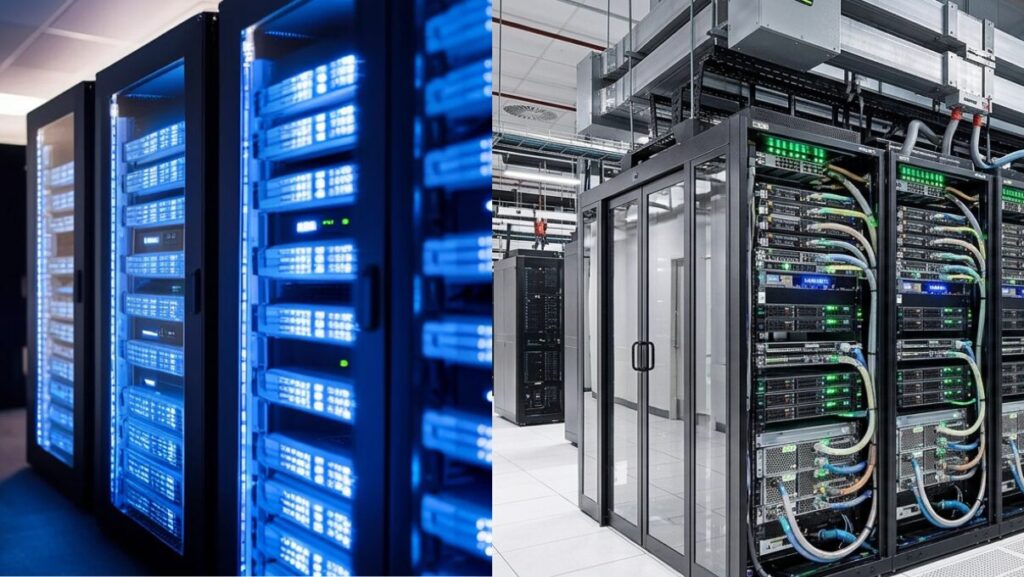
Digital infrastructure is moving rapidly from legacy server architectures to specialized compute facilities optimized for high-performance AI workloads. Traditional data centers act as the physical backbone for our digital world—housing the core IT infrastructure, hardware, and repositories required to store and manage application data. AI factories, by contrast, are specialized engines designed to turn that raw data into intelligent, revenue-generating digital outputs.
Rather than being a uniform architecture like the data centers of the past few decades, an AI data center represents a highly distinct engineering ecosystem defined by 10x compute density, complex thermal dynamics, and intensive power requirements. To satisfy these evolving operational and safety demands, AI firms need to redesign legacy data center configurations to accommodate the intense mechanical and electrical realities of accelerated computing in the AI era.
High-Voltage Architecture: The Shift to 800VDC Power Distribution
Traditional data centers are typically built to distribute power through standard alternating current (AC) lines or low-voltage direct current (DC) systems, usually feeding server racks at 48V or 54V configurations. While these layouts are highly effective for general-purpose CPU workloads operating at 5 to 15 kW per rack, they hit a wall when faced with high-density AI hardware.
Modern AI GPU clusters are pushing rack densities past 50 kW, 100 kW, and toward megawatt-class thresholds. Traditional low-voltage designs introduce resistive power losses and choke valuable rack space that would otherwise hold revenue-generating processors. Re-configuring low-voltage distribution would require an unsustainable and costly volume of copper cabling and massive connectors to handle the resulting electrical current. Since there are only two options to achieve higher power delivery – increasing voltage or increasing current, that leaves voltage as the way forward for high-density AI data centers.
To overcome these constraints, next-generation AI factories are transitioning to an 800VDC power distribution architecture, a strategy that streamlines the power train by converting medium-voltage grid power directly to high-voltage DC at the data room, slashing in-rack copper requirements, and eliminating redundant conversion steps that have a negative impact when operators are optimizing for tokens per watt.
Workload Volatility: GPU Transients and Power Spikes
Unlike traditional data centers that maintain a relatively flat, highly predictable power consumption baseline, AI clusters operate in a continuous state of intense volatility. The parallel processing required to train large language models means that thousands of GPUs must execute massive matrix operations synchronously.
This operational pattern causes the electrical demand of a single server row to swing from an idle state to full utilization and back again in a matter of milliseconds. These rapid transitions trigger severe high-frequency power spikes and microsecond-level GPU transients. Insights from Vertiv’s data center power architecture analysis highlight that these erratic load fluctuations create significant electrical noise, stress delicate silicon components, and make it exceptionally difficult for legacy power management systems to maintain voltage stability across the data hall without advanced rack-level mitigation.
Facility-Level Load Swings and Grid Interaction
When these localized power spikes and GPU transients are aggregated across an entire gigawatt-scale facility, they manifest as massive, unpredictable facility-level load swings. A data center’s total power draw can abruptly ramp up or down by hundreds of megawatts within seconds as training jobs launch, idle, or execute checkpointing operations.
This unprecedented volatility transforms the data center from a passive, stable consumer of electricity into an active, highly dynamic grid asset. These abrupt facility-level swings pose a direct threat to the stability of local utility grids, creating localized voltage sags and straining transformer infrastructure, which fundamentally alters how energy must be planned, delivered, managed, and automated across the AI value chain.
The Infrastructure Implications for Battery Selection
These intersecting challenges—including 10x rack-level densities, high-voltage 800VDC architectures, continuous power spikes, and massive facility-level load swings—fundamentally rewrite the rules when it comes to selecting battery storage solutions to serve AI datacenters.
In this high-stress environment, an energy storage system can no longer perform just backup power or peak shaving; instead, it must serve as an active, high-throughput control asset capable of bidirectionally absorbing rapid power spikes and injecting instant energy to smooth out volatile load swings.
Because lithium-ion systems present thermal runaway risks, especially under the high thermal stress of dense computing environments, next-generation AI infrastructure demands a new approach for inherently safe, long-lasting storage architecture.
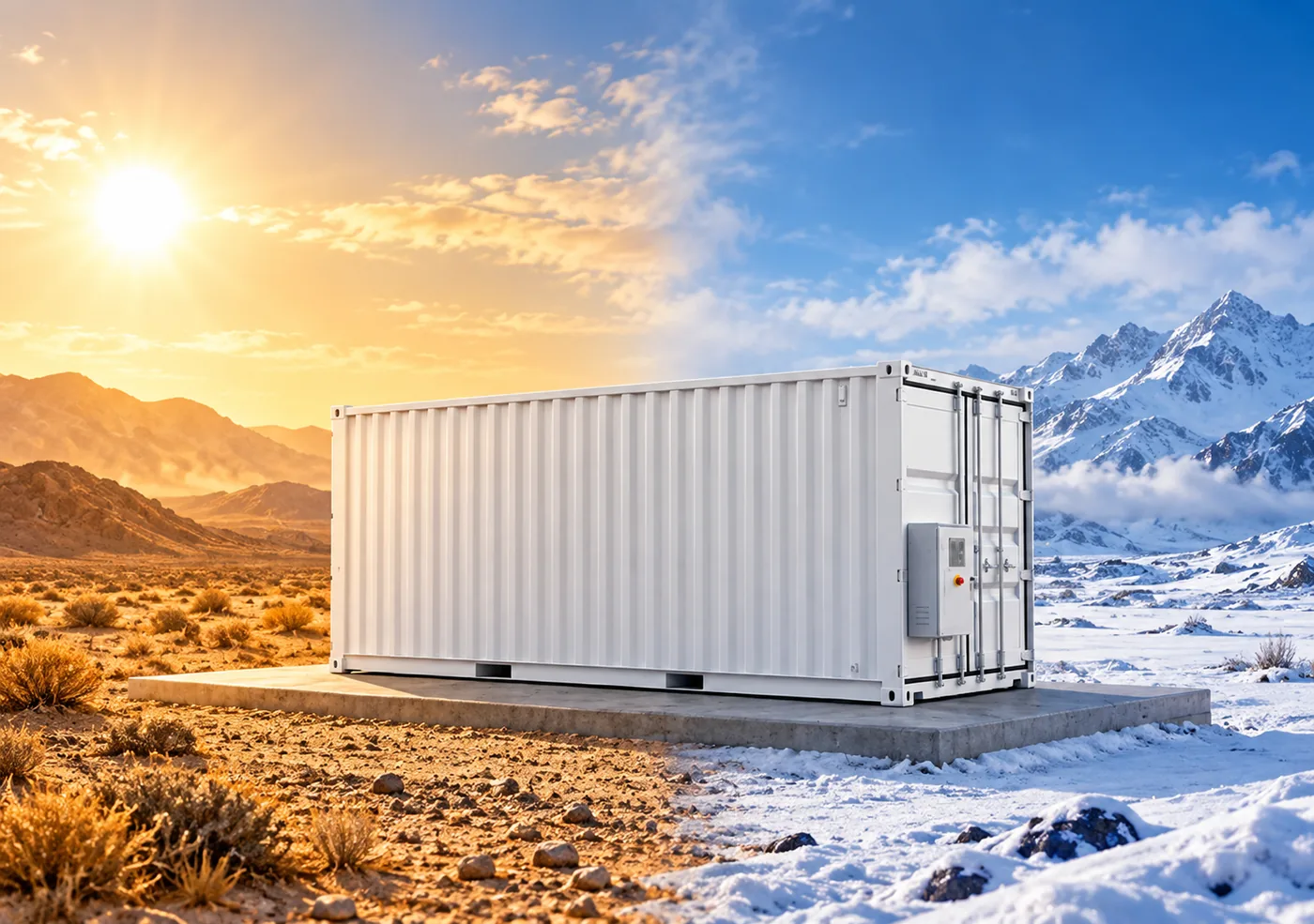
To bridge this critical infrastructure gap, Alsym Energy is developing a high-performance, non-flammable polyanionic battery solution engineered to manage grid-scale power and volatile data center workloads. Alsym’s NFPP+ technology eliminates the pathways that lead to thermal runaway, offers exceptional cycle life and operates in a significantly wider temperature range, making it an asset rather than a liability in current and future AI datacenter use cases.
Learn more about how Na-Series non-flammable platform delivers a reliable, high-ROI foundation for the global intelligence economy.