AI data centers are here – and they are a different beast when it comes to the power they consume.
An AI data center campus can now draw on the order of a gigawatt or more of electricity; an amount of power rivaling that of approximately 700,000 average U.S. homes. It should come as no surprise, then, the Department of Energy’s 2026 National Transmission Needs Study names AI data centers, alongside domestic manufacturing and other large industrial loads, as the principal driver of new transmission investment in the country — a stark shift from the infrastructure planning of the past centered around reliability and fixing up aging systems. Delivering a gigawatt of new capacity for a single user is a whole new ball-game, and as it stands, local grids often don’t have the spare transmission capacity to serve that load without upgrades that can take years.
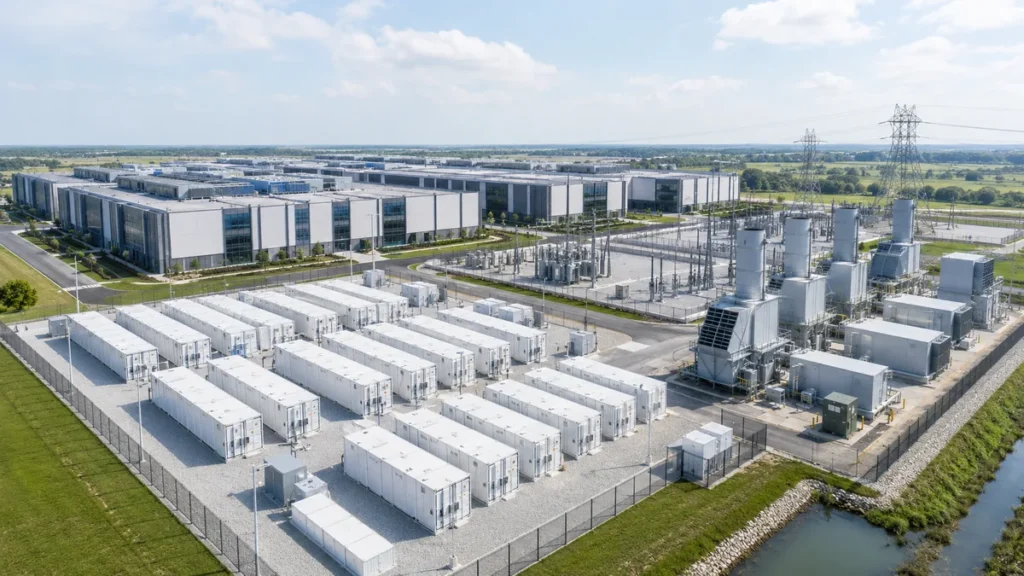
That gap is why, according to Bloom Energy’s recent Data Center Power Report, 61% of data center developers now plan to bring their own power if the grid can’t supply enough, fast enough. Increasingly, that bring-your-own-power strategy means an outdoor battery yard paired with generation from an on-site gas turbine. BloombergNEF has tracked 4.9 GW of battery storage announcements co-located with on-site fossil generation at data centers — about a third of all announced on-site data center battery capacity.
The benefits of this configuration are starting to materialize. Storage-backed flexibility can unlock a faster grid connection outright. A December 2025 study from Princeton’s ZERO Lab, Camus Energy, and Encoord modeled a 500 MW data center using a flexible grid connection paired with battery-backed on-site capacity, and found it could reach full operation three to five years faster than one waiting for conventional transmission and generation upgrades.
It also enables invaluable flexibility for utilities: battery storage can absorb an AI data center campus’s load swings, allowing the site to demand a smoother, more predictable draw of power from the grid. Using batteries alongside gas generators is a well-known partnership but has never deployed at this scale. With the stakes this high batteries are back in the spotlight and specifically battery chemistries that can do the job of serving off-grid AI data centers effectively.
Putting utility-scale storage between the turbine and the GPU
Gas turbines are built for steady baseload, but they aren’t designed to track a load that can swing by hundreds of megawatts within seconds the way a large GPU training run can. An outdoor battery is the buffer that prevents unexpected up and down rips of power demand directly at the turbine. Batteries are a buffer that can work in both directions: absorbing surplus when load drops, and discharging hard when GPU load ramps in seconds.
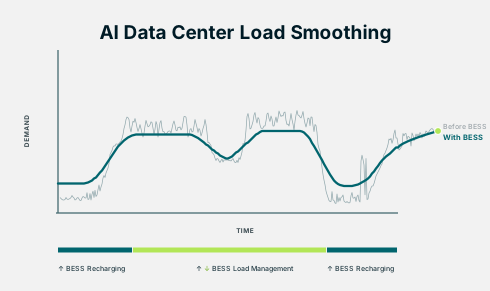
Storage does more than smooth a single rack’s load profile at these sites: it can buffer the high-frequency swings that would otherwise stress generation equipment, letting turbines run closer to a steady, fuel-efficient setpoint instead of constantly following the load. A storage system with a grid-forming inverter can also establish a reference frequency for the site’s generation equipment to synchronize to after a fault. Without that capability, the grid sets the reference frequency and continuing operations through a grid fault becomes near impossible. A beneficial arrangement for data center facilities, for turbines, and the utility.
The cell chemistry decides what the buffer can safely do
There are two criteria that determine whether a battery storage system can do this job, and both have to do with the chemistry of the battery cells moving energy in and out.
One is thermal stability: the load following use case for AI data centers, when in the megawatt scale, causes massive heat generation internal to the cell. If that heat generation is going to accelerate the degradation of the battery, it won’t be a reliable solution for very long. If that heat generation can send your battery into thermal runaway, fire risk and system instability become serious threats.
The second is C-rate and cycle life. AI data center load-following requires a cell that can deliver high power output on demand, over and over for years, without accelerated degradation or the need for augmentation.
Alsym’s Na-Series as a Partner for On-site Gas Turbines
Alsym’s Na-Series is built to satisfy both requirements.
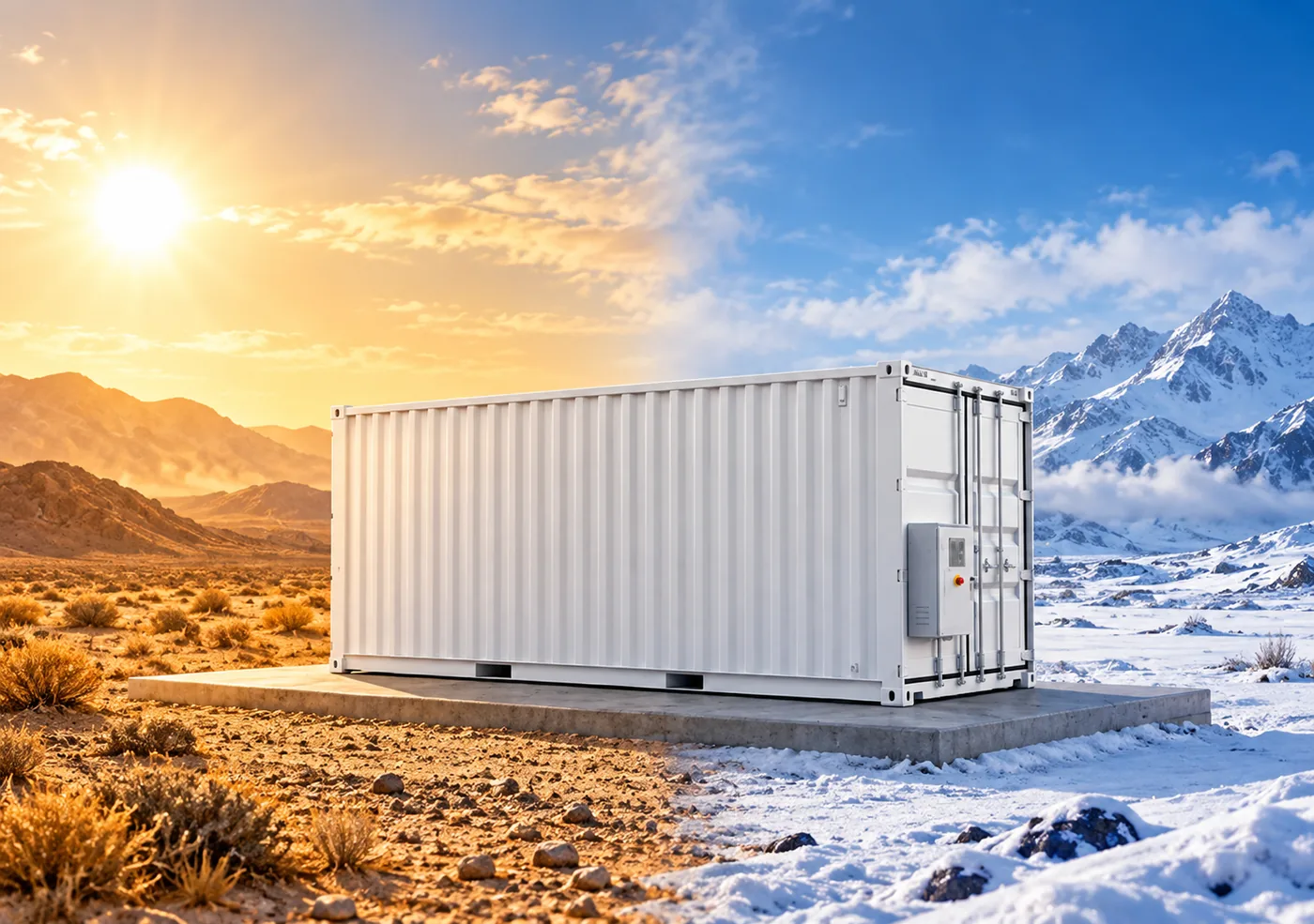
Alsym’s Na-Series sodium-ion cells are built with NFPP+ chemistry, which is uniquely tolerant to elevations in temperature during charge and discharge cycles. In cell-level thermal testing, the cells showed no thermal runaway at 400ºC.
The round-trip efficiency of NFPP+ lands at 97% with a cycle life engineered for 15,000 deep-discharge cycles. These are specifications that matter directly to a gas + storage site, because every percentage point of round-trip loss and every cycle of degradation shows up as fuel burned or capacity replaced over the life of the asset.
Sodium-ion cells trade cell-level energy density for what NFPP+ chemistry removes from the system. What it buys back now is bigger than the footprint it costs: no active cooling, fire suppression, gas detection, or blast-rated enclosure. Auxiliary components like these are projected to account for more than 20% of total project cost in lithium-ion builds — cost, complexity, and footprint that a chemistry with no thermal runaway risk can simply eliminate.
The Alsym Perspective
Gas turbines alone can’t track AI’s sub-second load swings, and most local grids can’t deliver gigawatt-scale power on a data center’s timeline. Pairing on-site generation with battery storage solves both problems at once — but only if the cell inside the battery system tolerate wide temperatures over many thousands of cycles without adding cooling, suppression, and setback requirements that eat into the site’s footprint and budget.
That’s the case for a sodium-ion cell that prevents thermal runaway by chemistry. Alsym’s Na-Series is built for exactly this kind of demanding, high-throughput, safety-constrained deployment — a cell that integrators can build a simpler gas + storage architecture around.
Learn more about Na-Series cells and NFPP+ chemistry.