Lithium-ion’s declining cost trajectory is often framed as a story of cells, scale, learning curves, and a 2021-22 lithium price spike that “probably won’t happen again.”
But that story is both incomplete and far from over. Lithium prices still react quickly to supply interruptions, policy signals, and shifting market expectations. Further, “cost” is now being looked at more holistically; it’s not just the materials a chemistry depends on and the supply chains behind them, or the cost to assemble them – it’s also the systems the batteries go into and what costs can be incurred as result of the underlying battery technology.
This is what makes sodium-ion’s cost proposition so different from lithium’s: it is built on abundant, low-cost, price-stable materials with a lower cost floor than lithium-ion, and due to its chemical properties offers a simpler system architecture that can reduce levelized cost of storage (LCOS).
The advantage sodium-ion holds is structural — built into the materials, the cell architecture, and the supply chain — and it can widen as manufacturing scales, system-level costs further enter the calculation, and energy density gains are achieved. The sections below highlight the economic dimensions that ultimately position sodium-ion as a less expensive battery storage option than lithium-ion.
1. Abundant, Low-Cost, Price-Stable Raw Materials
Materials account for roughly 65 to 70 percent of a battery cell’s total cost, so the input bill significantly influences the economics. Sodium-ion’s foundational feedstock is sodium carbonate (soda ash), which is more than 1,000 times more abundant in the Earth’s crust than lithium and trades around ~$300 USD per tonne versus the per commanded by battery-grade lithium carbonate.
Just as important as the price is its stability. Lithium is geologically scarce and geographically concentrated, which is precisely why its spot price is prone to the boom-and-bust cycles from factors such as mine closures, export controls, or trade speculation. Sodium carbonate, by contrast, is a globally produced bulk commodity with historically low price volatility. A chemistry anchored to soda ash is insulated from the supply shocks that have repeatedly destabilized lithium-ion economics.
Beyond sodium as a base, the choice of cathode can either mitigate or compound the effect. Some sodium-ion batteries still use relatively expensive nickel or vanadium. But others, like polyanionic sodium iron pyrophosphate (NFPP), use iron and phosphorus in the cathode active material—two of the most abundant and inexpensive industrial inputs available. NFPP contains no cobalt and no nickel, removing exposure to the critical-mineral heavy supply chains of nickel-based lithium-ion chemistries.
Hard carbon currently represents a sizeable cost share in sodium-ion cells, but because it can be produced from abundant bio-derived precursors, its cost should decline as the supply chain matures, production scales, and processing yields improve.
2. Aluminum on Both Sides
The cost advantage extends into the cell’s physical construction. Because lithium alloys with aluminum at low potential, lithium-ion cells must use a more expensive copper current collector on the anode. Sodium does not alloy with aluminum, so sodium-ion cells can use aluminum current collectors on both electrodes. The price difference is significant: global benchmark prices as of early July 2026 are roughly $13,400–13,500 per metric ton for copper and $3,050–3,100 per metric ton for aluminum. Eliminating copper foil from the anode removes one of the more costly components in the bill of materials.
3. Drop-In Manufacturing
A new chemistry usually carries the enormous capital cost of purpose-built factories. does not. It is a so-called “drop-in” technology: cells can be manufactured on existing lithium-ion production lines with only minor modifications. This lets manufacturers leverage any underutilized capacity as well as decades of accumulated process maturity, tooling, and scale rather than rebuilding. This ultimately lowers both the capital intensity and the execution risk of bringing sodium-ion to large-scale volumes.
4. The System-Level Advantage
Cell-level price is just one part of total cost of ownership. For systems used in applications with long service-life expectations like grid-scale storage, there are a few key capabilities that can highly impact a project’s Levelized Cost of Storage (LCOS). Round-trip efficiency (RTE), operating temperature range, flammability risk, and operational flexibility each play an outsized role in determining the LCOS for the system
This is where sodium-ion’s structural advantages really shine. When these capabilities are applied in a systems context, the result is a simpler asset which has a direct and significant impact on cost.
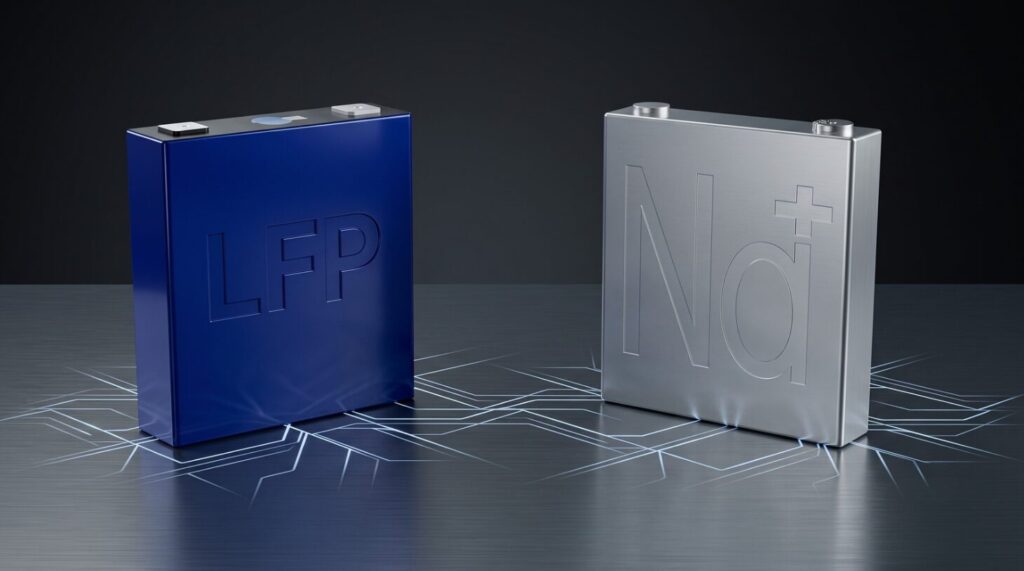
- Efficiency and throughput: Alsym’s Na-Series exceeds 95% system round-trip efficiency (RTE), about three percentage points higher than LFP. Higher RTE means less energy is lost as heat on every cycle. This means less heat dissipation that must be managed to avoid degrading the cell, and more energy throughput which translates to higher operational revenues.
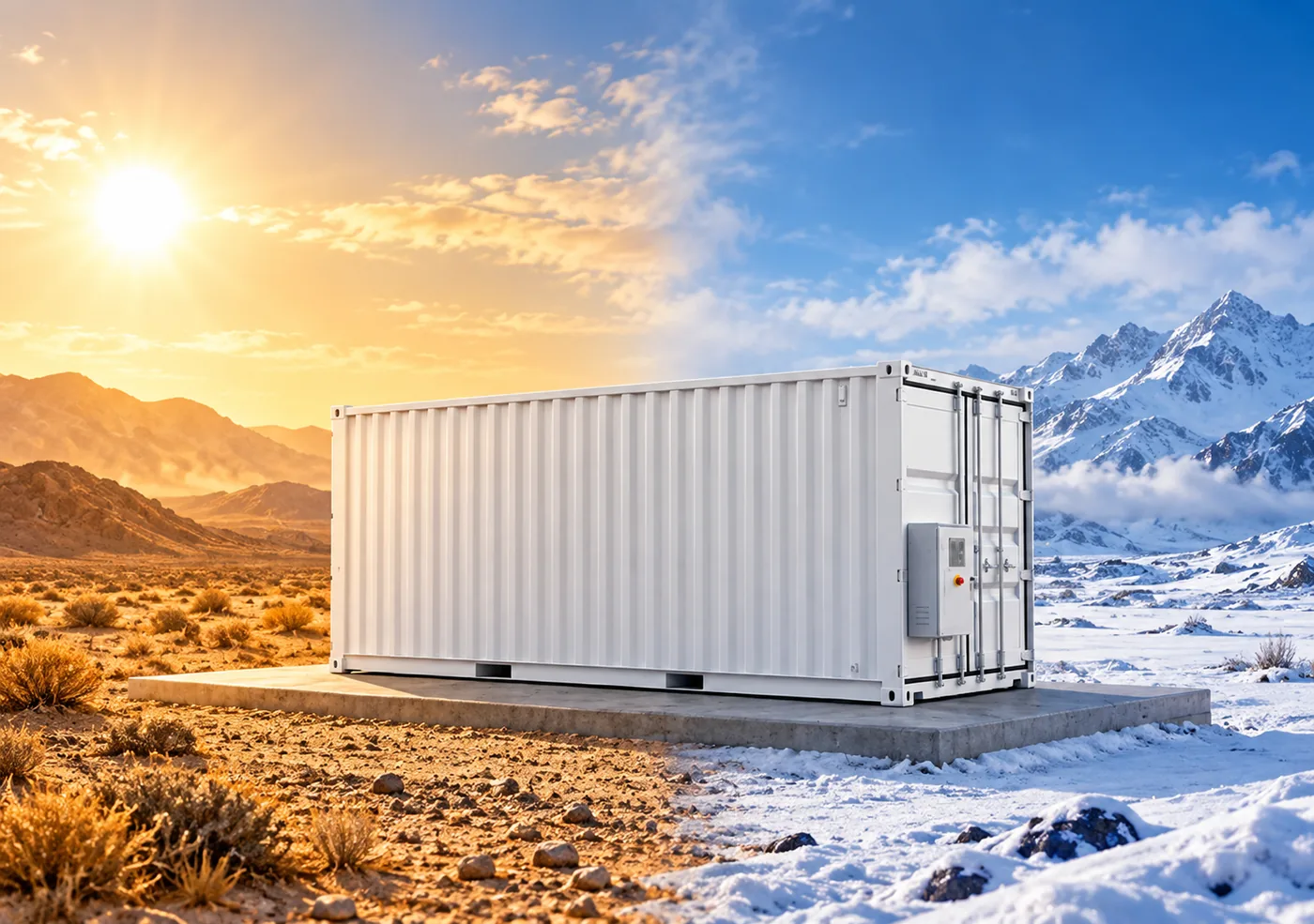
- Wide operating temperature range: Sodium-ion systems designed for broader temperature tolerance (-40°C to 60°C versus LFP’s 0°C to 45°C) can reduce the need for complex thermal-management equipment. A wider operating window can support simpler cooling architectures, lower auxiliary power consumption, and reduced ongoing maintenance. Swapping out active for passive cooling translates to 90% lower OpEx and roughly 30% lower total cost of ownership versus LFP.
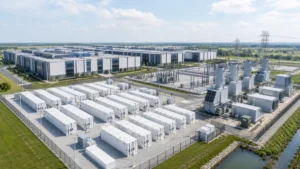
- Non-flammability: This is where Alsym Energy’s NFPP+ technology is distinct. As a non-flammable chemistry without the same thermal runaway pathway as conventional lithium-ion, NFPP+ has lower costs related to fire-suppression, thermal-containment, spacing, and setback requirements that are necessary for flammable chemistries. Thermal management and fire protection equipment in BESS are projected to account for more than 20% of total system costs by 2035; as those cost categories grow, avoiding them should widen the LCOS advantage. That can lower cost not only inside the container, but also at the project level through simpler site layout, reduced land-use constraints, easier installation, and potentially smoother permitting.
- Operational flexibility: Many LFP systems are operated within prescribed state-of-charge ranges and annual cycling limits to preserve warranty coverage. Sodium-ion systems change that dynamic by performing deeper discharge and higher cycling tolerance that give operators more usable flexibility to capitalize on revenue-driving or cost-saving use cases.
5. Future Energy Density Gains
Future energy density gains could further improve sodium-ion economics. As cell chemistry and design continue to advance, sodium-ion batteries may be able to store more energy with the same basic materials platform, reducing the amount of material, hardware, and system infrastructure required per kilowatt-hour.
That would build on the advantages already discussed rather than replace them. Sodium-ion’s cost case is rooted in structural factors today, but higher energy density over time could create an additional cost lever: more stored energy per cell, lower material intensity, reduced system footprint, and better economics at scale.
The Alsym Perspective
Battery energy storage is becoming a cornerstone for the generational transformation of our energy infrastructure, and with it evaluating battery cost deserves more nuance than just global cell cost per kilowatt-hour (kWh). Doing so ultimately misses the larger economic picture. As detailed in our white paper Assessing the Promise and Potential of Sodium-ion in 2026, the true economic case for sodium-ion is best demonstrated in a system context, where eliminating the engineering control add-ons required by volatile chemistries removes cost that never appears on a cell datasheet. These are the long-term value drivers, and in the next few years as sodium-ion cell costs decline 30-40% relative to LFP costs as predicted by Morgan Stanley Research, the $/kWh and system-level economics will have a substantial advantage over Li-ion.
Learn more about the newest generation of polyanionic sodium-ion NFPP+ technology and how it delivers a low-LCOS foundation for global energy storage infrastructure.