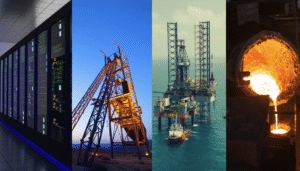
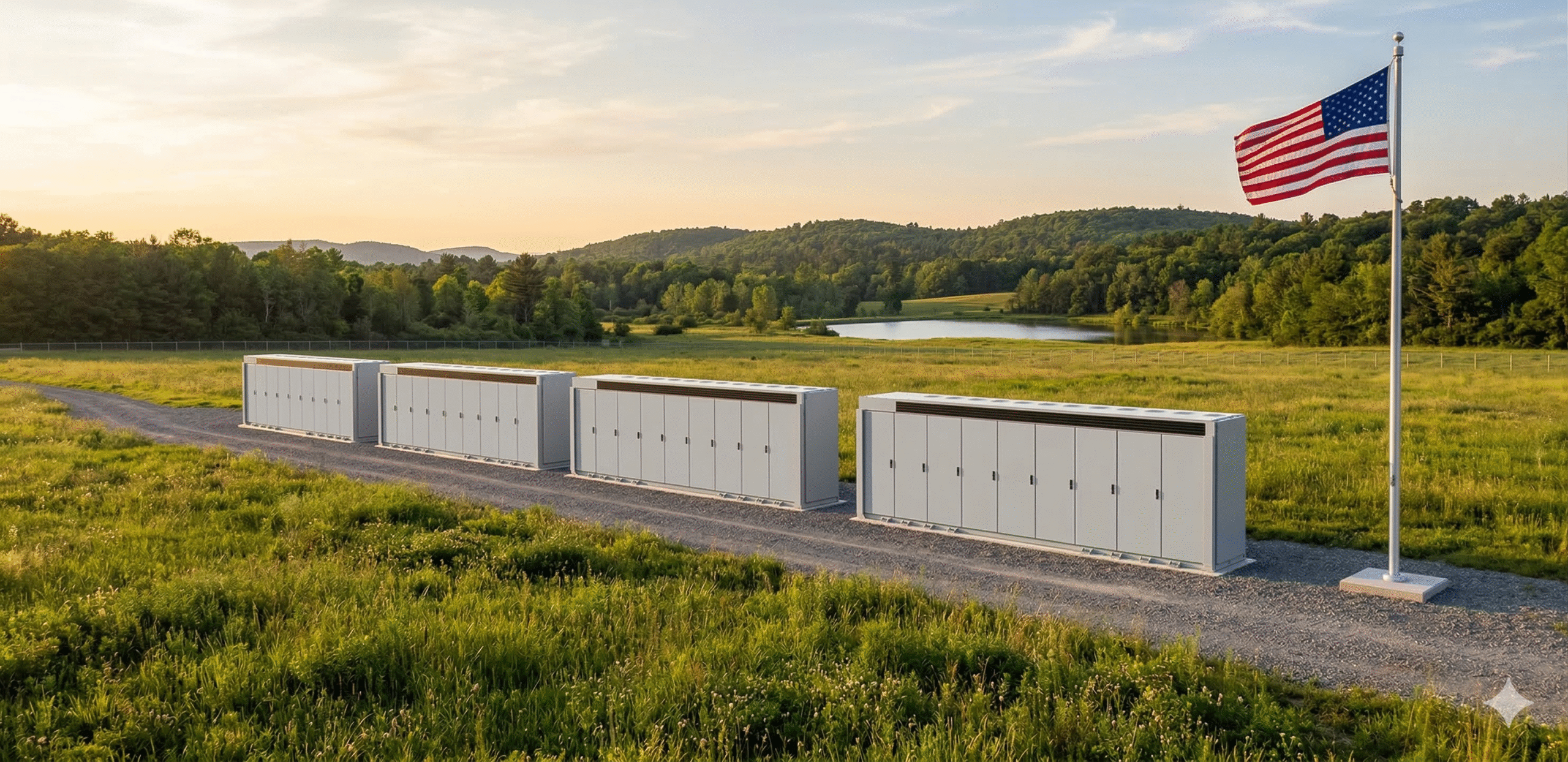
A decade ago, a U.S. startup A123 successfully commercialized lithium iron phosphate (LFP) chemistry—a technology born in domestic national labs—but failed to build the manufacturing infrastructure required to scale it. As a result, the commercialization race was lost, and the U.S. now relies heavily on imported lithium-ion cells to power its own critical infrastructure. As of December 2025, 99% of LFP cathode components, 92% of anode components, 100% of LFP battery cells, and 77% of BESS system supply is controlled by China.
That reliance has created a severe vulnerability. The rapid expansion of AI data centers, widespread industrial electrification, and the need to firm up intermittent renewable energy sources are pushing the U.S. power grid to its absolute limits. Attempting to solve this localized stationary power crisis with a foreign-controlled battery supply chain is proving to be complex, costly, and a significant security risk.
But all is not lost. The emerging sodium-ion battery sector provides the U.S. with a vital second chance. Because the global sodium-ion industry is still scaling, developers and policymakers have a viable, albeit brief, window to establish a robust domestic manufacturing ecosystem from the ground up. By committing to alternative chemistries designed specifically for next-generation energy infrastructure, the U.S. can secure the grid, stabilize energy economics, and avoid repeating the strategic errors of the lithium-ion industry’s infancy.
An Outdated Grid Elevates the Urgency
The accelerating demand for alternative energy storage is rooted in the unprecedented power requirements of modern digital infrastructure. Modern AI training facilities and hyperscale data centers require hundreds of megawatts to operate, potentially placing massive, concentrated loads on regional transmission networks. Utilities are struggling to connect these facilities fast enough, leading to extended project timelines and grid instability. Recent projections from Goldman Sachs estimate that AI will drive a 165% increase in global data center power demand by 2030. Domestically, researchers forecast that U.S. data center consumption could reach up to 580 terawatt-hours (TWh) by 2028—consuming up to 12% of the nation’s total electricity.
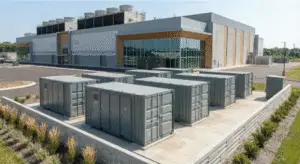
To bridge this gap, developers are increasingly relying on massive stationary energy storage systems to smooth out power delivery, manage peak loads, and provide uninterrupted backup power. However, sourcing these massive battery deployments entirely from the mature lithium-ion market presents significant economic challenges. Overseas manufacturers benefit from deeply integrated mineral processing networks, leaving the U.S. energy sector exposed to the price volatility and availability constraints of critical minerals.
For example, recent International Energy Agency (IEA) analysis highlights how sudden export controls on vital lithium-ion components—like LFP cathode materials—are threatening to severely restrict global battery production and drive up costs.Relying on these constrained international networks makes long-term project planning and budget forecasting highly unpredictable for utility planners and infrastructure developers.
A Closing Window for Supply Chain Independence
We are at a critical juncture in the energy transition. The sodium-ion industry is currently moving from early commercialization to massive industrial scale. If the U.S. hesitates to invest in domestic manufacturing capabilities now, overseas competitors will inevitably capture the sodium-ion market using the exact same playbook they used to dominate lithium-ion.
Losing the lithium-ion race meant losing control of the automotive supply chain. Losing the sodium-ion race would mean surrendering control of the very infrastructure required to power the next generation of the American economy. Attempting to catch up in a mature market is a highly capital-intensive endeavor. The U.S. must seize this moment to build processing facilities, manufacturing plants, and supply networks while the global playing field is still relatively level.
How Sodium-Ion Delivers What the Grid Needs
Sodium-ion batteries offer low material costs (at scale), high cycle life performance, very high efficiency, fast charging capability, a wide operating temperature range, and rely on widely available inputs that eliminate critical mineral exposure.This offers a clean slate to build an energy storage ecosystem tailored specifically to the needs of the grid.
Unlike lithium, sodium is globally abundant and can be sourced domestically from naturally occurring deposits or seawater. In fact, sodium is the sixth most abundant element in the Earth’s crust (comprising roughly 2.6% by weight), making it over 1,000 times more abundant than lithium.
Beyond raw element abundance, the fundamental chemistry of sodium-ion unlocks massive manufacturing and regulatory advantages. Unlike LFP batteries that require heavy, expensive copper foil for the anode, sodium-ion cells can use aluminum current collectors for both the anode and cathode—a material that is significantly lighter and roughly three to four times cheaper. The raw commodity economics are equally stark: even with market adjustments in 2026, the soda ash used to derive battery-grade sodium remains a fraction of the cost at historically stable rates of $300 to $400 per ton, compared to lithium carbonate which continues to command well over $10,000 per ton. Crucially for U.S. developers, utilizing a domestically sourceable chemistry provides an immediate “regulatory CapEx” advantage by entirely avoiding the steep 2026-era tariffs on Chinese LFP imports, sheltering critical infrastructure projects from the financial fallout of ongoing trade disputes.
This fundamentally breaks the reliance on constrained international mineral supply chains and entirely bypasses associated geopolitical bottlenecks. By establishing domestic sodium-ion manufacturing, the U.S. can build a secure, end-to-end supply chain characterized by predictable material costs and reliable availability for gigawatt-scale projects. This localized approach ensures that developers have a dependable pipeline of materials that are immune to overseas trade disruptions or critical mineral shortages.
Predictable Material Costs Drive Domestic Manufacturing
With material costs sufficiently stabilized, the sodium-ion energy storage market can take off domestically. While historical lithium pricing has proven highly erratic and vulnerable to international bottlenecks, the raw materials required for sodium-ion chemistries are abundant and deeply insulated from global trade shocks, ensuring a remarkably stable cost foundationfor OEMs and their customers.
The economic potential of this stability is striking. According to recent analysis by Morgan Stanley, as global supply chaincapacity expands, cost reductions for sodium-ion technology will accelerate rapidly. Once industry production capacity reaches the 100 GWh threshold, sodium-ion battery prices are projected to fall more than 30% lower than traditional lithium iron phosphate (LFP) batteries. This steep cost curve makes sodium-ion an exceptionally attractive opportunity for the massive, capital-intensive deployments required to meet our modern energy storage needs.
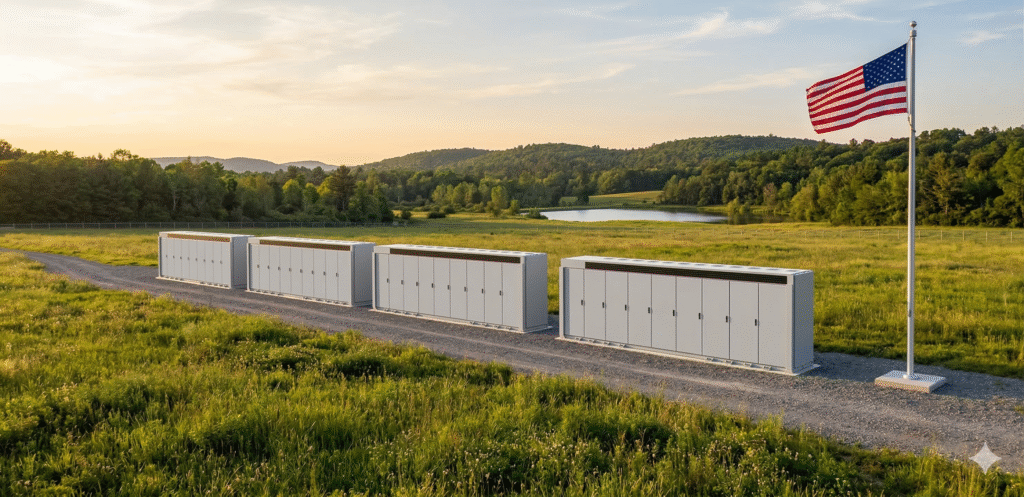
Alsym Energy is leveraging this favorable economic trajectory and the supply chain stability of abundant materials to develop non-flammable sodium-ion batteries built specifically for stationary applications. Because these cells do not rely on constrained minerals and avoid the inherent thermal risks of legacy technologies, they are positioned to scale to the levels needed for our energy needs while avoiding being controlled by foreign countries. For facility operators, stable low materials costs and enhanced safety translates to predictable upfront procurement costs, simplified site permitting, and the elimination of expensive, active thermal management systems. The economic case for sodium-ion is clear: it provides a stable, scalable foundation for massive infrastructure deployment without the financial unpredictability of the lithium market.
Securing Our Energy Future
The transition to a highly electrified, data-driven economy requires an energy storage infrastructure that is scalable, economical, and domestically secure. The U.S. simply cannot afford to miss this technological wave. By investing in and deploying advanced sodium-ion solutions today, industry leaders can build a resilient grid while reclaiming a central role in advanced battery manufacturing.
Achieving true grid resilience and lasting energy independence means adopting technologies built for the vast present and future needs for battery energy storage.