The news that Natron Energy ceased operations in September 2025, halting its plans for a massive $1.4 billion, 24-gigawatt-hour gigafactory in North Carolina, has prompted interesting discussions about the trajectory of sodium-ion technology. Over a 13-year run, Natron successfully brought Prussian Blue cathode chemistry out of the laboratory and into commercial deployment. They proved to a skeptical market that a lithium-free battery could function reliably. While their exit marks a difficult moment for the early sodium-ion community, it is crucial to understand what this development does and does not mean for sodium-ion chemistries.
Despite this isolated commercial setback, the global sodium-ion market remains exceptionally robust, with industry analysts projecting it to surpass $7 billion by 2034. A common misconception is that the sodium-ion market is a uniform entity, leading some to incorrectly assume that the company’s operational closure represents an inherent flaw in sodium-ion chemistry itself. In reality, sodium-ion represents a diverse family of chemical architectures, much like lithium-ion encompasses everything from LFP to NMC. While Natron utilized one specialized chemistry within the sodium-ion category, their exit could be attributed to causes other than any fundamental technical flaw. Regardless of the exact catalysts for Natron’s closure, the conflictingnarratives that followed offer a crucial takeaway for the energy sector. To successfully navigate the sodium-ion space, stakeholders must understand the underlying chemical distinctions, as different architectures are uniquely suited for entirely different commercial applications.
Furthermore, Natron pursued distinctly different use cases than companies focused on other applications like utility-scale or bulk commercial stationary storage. Their technology was primarily geared toward ultra-high-power, short-burst applications—such as uninterrupted power supply (UPS) systems for data centers—which carry entirely different market dynamics and engineering requirements. Their closure is that of a specific business model attempting to scale a specific chemistry, rather than anything indicative of a failure of the broader sodium-ion concept.
The Misconception of a Monolithic Market
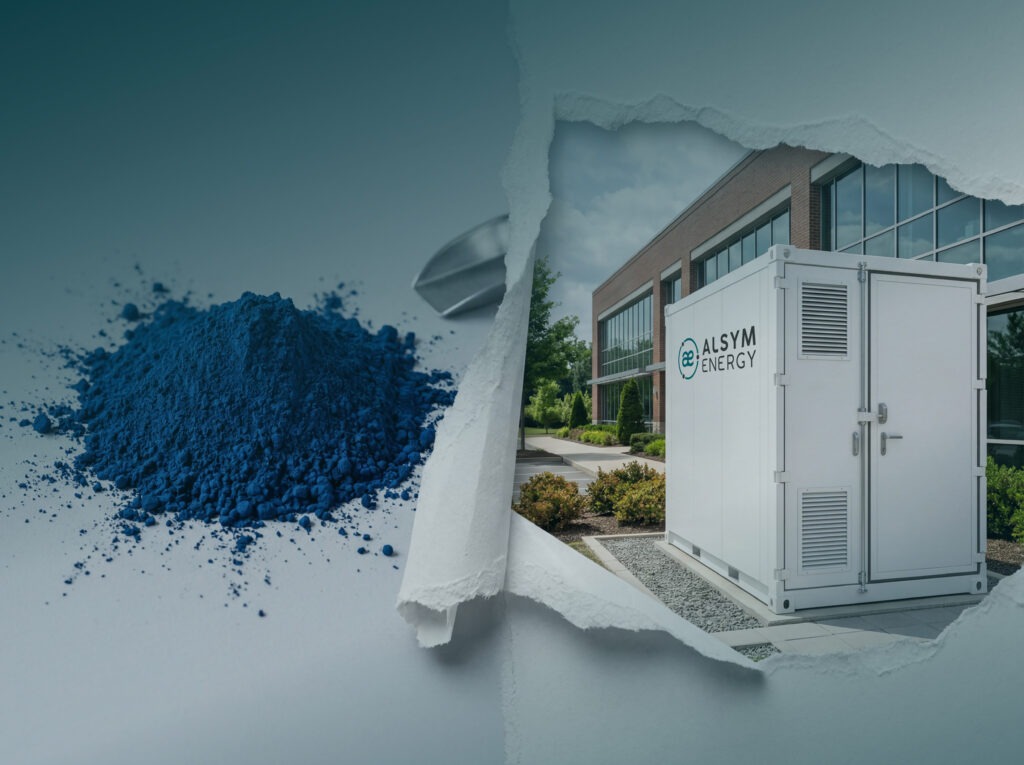
Treating all sodium-ion batteries as identical obscures deep chemical diversity. Prussian Blue, the cathode material utilized by Natron, is characterized by its wide, open crystalline lattice. This structure allows for incredibly rapid charge and discharge rates, making it well-suited for industrial power applications requiring immediate, intense bursts of energy to stabilize a system for a few minutes.
However, prioritizing rapid power delivery involves structural trade-offs. Prussian Blue is notoriously difficult to synthesize at gigawatt scale without introducing defects or moisture contamination. It requires highly controlled manufacturing environments, which heavily drive up capital expenditures. Additionally, the open structure results in lower overall volumetric energy density. To match the production capacity of higher-density lithium-ion competitors, manufacturers scaling Prussian Blue required significantly larger infrastructure and additional production lines. Research, including a 2025 Stanford University study, also highlighted how certain early sodium architectures faced degradation problems that compromised long-term cycle life.
But the fact that a Prussian Blue architecture faced scaling hurdles does not mean all sodium-ion chemistries share those vulnerabilities. Transitioning away from critical minerals like lithium, cobalt, and nickel remains an economic necessity. The path forward simply requires utilizing branches of the sodium-ion family tree built specifically for massive scalability and dense energy storage.
Why NFPP is Built for Energy Storage
For markets like commercial real estate, defense installations, and utility sectors, the priority is not only ultra-fast, multi-minute discharging. These markets require stable, long-lasting, and easily manufactured bulk storage to manage peak shaving, load shifting, and renewable energy integration over several hours.
The urgency for these bulk solutions is accelerating. As lithium-ion deployments face increasing community pushback, with developers recently canceling roughly 79 gigawatts of battery storage capacity nationwide due to local fire and safety concerns, the market is actively seeking reliable, non-lithium alternatives. This is where polyanion chemistries, specifically NFPP (sodium iron fluorophosphate), become really interesting.
NFPP utilizes a robust, three-dimensional polyanion framework bonded by strong covalent connections. This structurally rigid 3D framework experiences less than 4% volume change during operation, it maintains exceptional structural stability, resulting in a long-duration cycle life. Furthermore, rather than relying on problematic transition metals like manganese, nickel, or cobalt, which can decompose and introduce severe thermal risks, the NFPP cathode is built on stable, widely available elements like sodium, iron, and phosphorus. By leveraging this highly stable, non-volatile foundation, battery engineers can deliver the dependable, heavy-duty energy storage required to meet the economic and performance demands of the broader grid market, entirely without sacrificing safety.
The Alsym Distinction: Moving to NFPP+
While standard NFPP represents a massive step forward for grid-scale stability, it still faces limitations regarding overall energy density and flammability. Modern energy demands are dense and relentless; as institutions like Oak Ridge National Laboratory recognize, training a single large AI model consumes hundreds of megawatt-hours of electricity. To meet these severe energy demands within the space constraints of modern data center footprints and utility substations, stationary storage must deliver more total capacity within a smaller physical footprint.
This strict market requirement was one of the drivers for Alsym Energy to develop our proprietary NFPP+ chemistry. By optimizing the structural framework and carefully tuning the cathode formulation, NFPP+ achieves significantly more energy density than standard NFPP models. This means developers can store more energy in fewer racks, directly reducing balance-of-system (BOS) costs and expensive site preparation requirements. Because NFPP+ leverages highly abundant materials, it maintainsthe supply chain advantages of sodium-ion while delivering superior performance metrics.
Just as important, NFPP+ guarantees a non-flammable system. While some standard NFPP configurations can still pose thermal risks depending on their volatile electrolyte pairings, Alsym’s Na-Series completely removes the risk of fire. This is a critical advantage as a growing number of local governments and communities enact strict moratoriums on lithium-ion storage projects, refusing to accept the severe fire and explosion risks associated with legacy chemistries. By removing the risk of thermal runaway, Alsym eliminates the need for active liquid cooling systems, HVAC and complex fire suppression infrastructure. NFPP+ dramatically lowers the total cost of ownership compared to legacy lithium-ion systems and earlier sodium-ion iterations.
What Natron’s Exit Tells Us
The stationary storage market recognizes the foundational contributions made at Natron. Their operational 600-megawatt-hour facility in Michigan forced the industry to look beyond lithium, proved that commercializing sodium-based cells was physically possible, and validated the immense market demand for alternative chemistries. Their work will remain a vital chapter in the history of battery technology.
Ultimately, a single company’s market exit is not a referendum on the viability of sodium-ion technology. As the broader industry continues to evolve, the path forward for stationary storage relies on deploying chemistry fundamentally optimized for grid demands. The needs of transient power applications differ vastly from those of multi-hour grid storage. Scaling to meet the world’s terawatt-hour storage needs requires a cathode built specifically for standard manufacturing lines, high volumetric density, and absolute safety.
By advancing from early architectures to optimize chemistries like NFPP+, the industry is establishing a practical path forward. The transition away from critical minerals remains a clear priority, and these next-generation sodium-ion solutions provide a steady, scalable foundation for the future of reliable stationary storage.